I am a researcher and program manager with a focus on economics, law, and community-led development. I'm particularly interested in how legal frameworks shape economic impact with applications for organizational structure and market-based models in sustainable agriculture, renewable energy, and beyond. My research is heavily shaped by my experiences working directly with limited-resource communities; for almost a decade, I have designed and coordinated programs around global health, local food systems, and socioeconomic disparity in rural Iowa and remote Maine. My current passion project is a grassroots "nonprofit cooperative model" designed to bridge the gap between market and community.
Please feel free to reach out to learn more about me, my work, and the resources that I recommend for others.

research
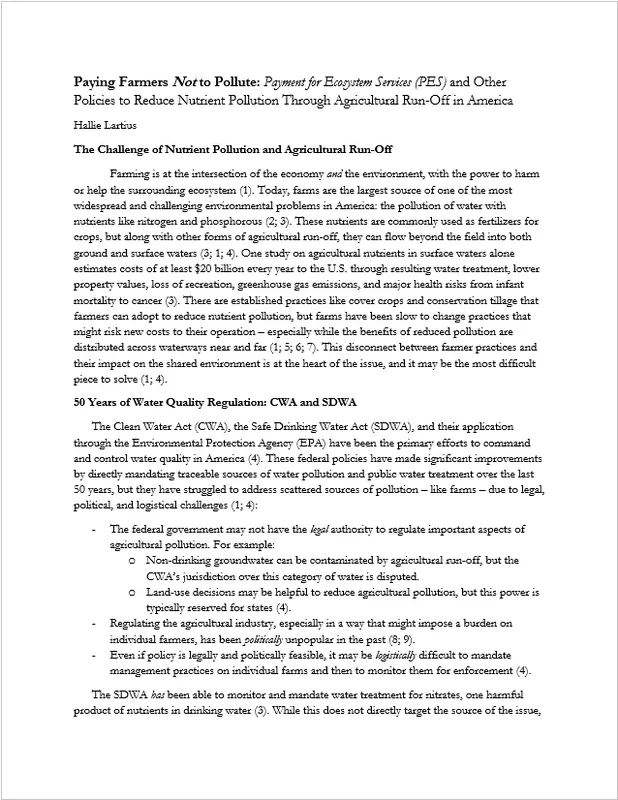
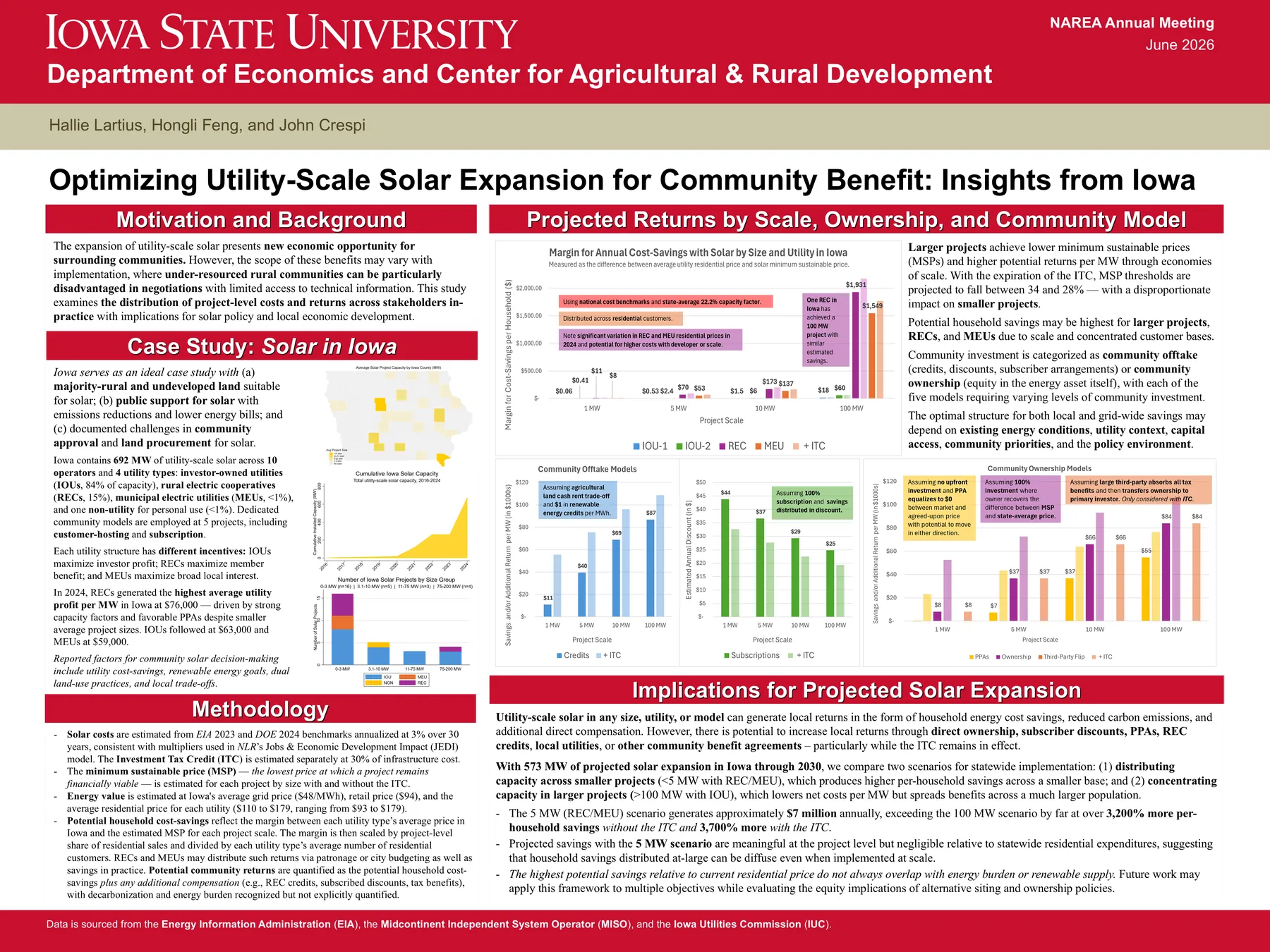
- "Optimizing Utility-Scale Solar Expansion for Community Benefit: Insights from Iowa." Lartius, Hallie; Feng, Hongli; Crespi, John. Presented at the Northeast Agricultural and Resource Economics Association (NAREA) 2026 Annual Meeting & Workshop. Working paper.
- "A Consumer Tool for Estimating Music Subscription Pay-Out." Lartius, Hallie. See the beta here.
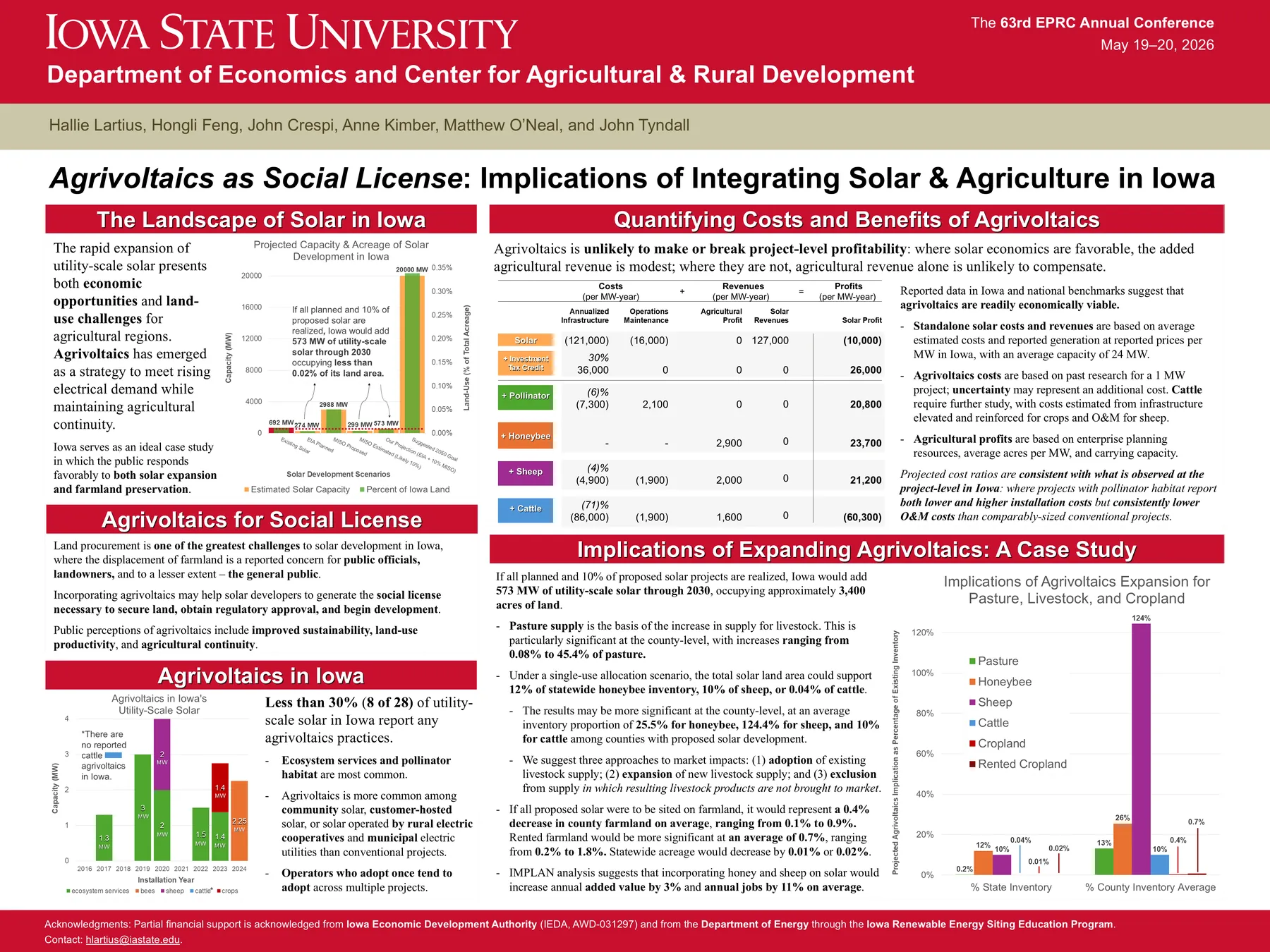
- "Agrivoltaics as Social License: Economic Tradeoffs and Opportunities for Integrating Livestock and Pollinators with Solar Energy in Iowa." Lartius, Hallie; Feng, Hongli; Crespi, John; O'Neal, Matthew; Kimber, Anne; and Tyndall, John. Presented at the Iowa State University 2026 Electric Power Forum. Working paper.
- "The Role of Enabling Policy in Legal Organizational Choice: Cooperative Formation in California Before and After the 2015 Worker-Owned Cooperative Act." Lartius, Hallie and Lagoudakis, Angelos. Working paper.
- "Building a Data Profile of Utility-Scale Solar in Iowa for Informed Local Decisionmaking." Lartius, Hallie and Feng, Hongli. Presented at the Iowa State University 2025 Norman Borlaug Lecture.
- "The Coase Theorem in practice: a review of the paying party's legal structure in relation to transaction costs, property rights, and wealth effects in payment for ecosystem services (PES) targeting agricultural water pollution." Lartius, Hallie.
- "Paying Farmers Not to Pollute: Payment for Ecosystem Services (PES) and Other Policies to Reduce Nutrient Pollution Through Agricultural Run-Off in America." Lartius, Hallie.
- "Water Quality Violation Disparities in Iowa Mobile Home Parks." University of Iowa Center for Health Effects of Environmental Contamination (CHEEC).
posters
writing
- "indianamericana: recipes from an Indian-and-American family in Indiana." Lartius, Hallie and Lartius, Betty.
- "Connecting locals to local food." Lartius, Hallie. The Working Waterfront. Published by the Island Institute. 2023.
- "Recognizing an island's landmarks." Lartius, Hallie. The Working Waterfront. Published by the Island Institute. 2022.
- "Island Women Speak." Lartius, Hallie. Presented at the Stonington Opera House. 2024.
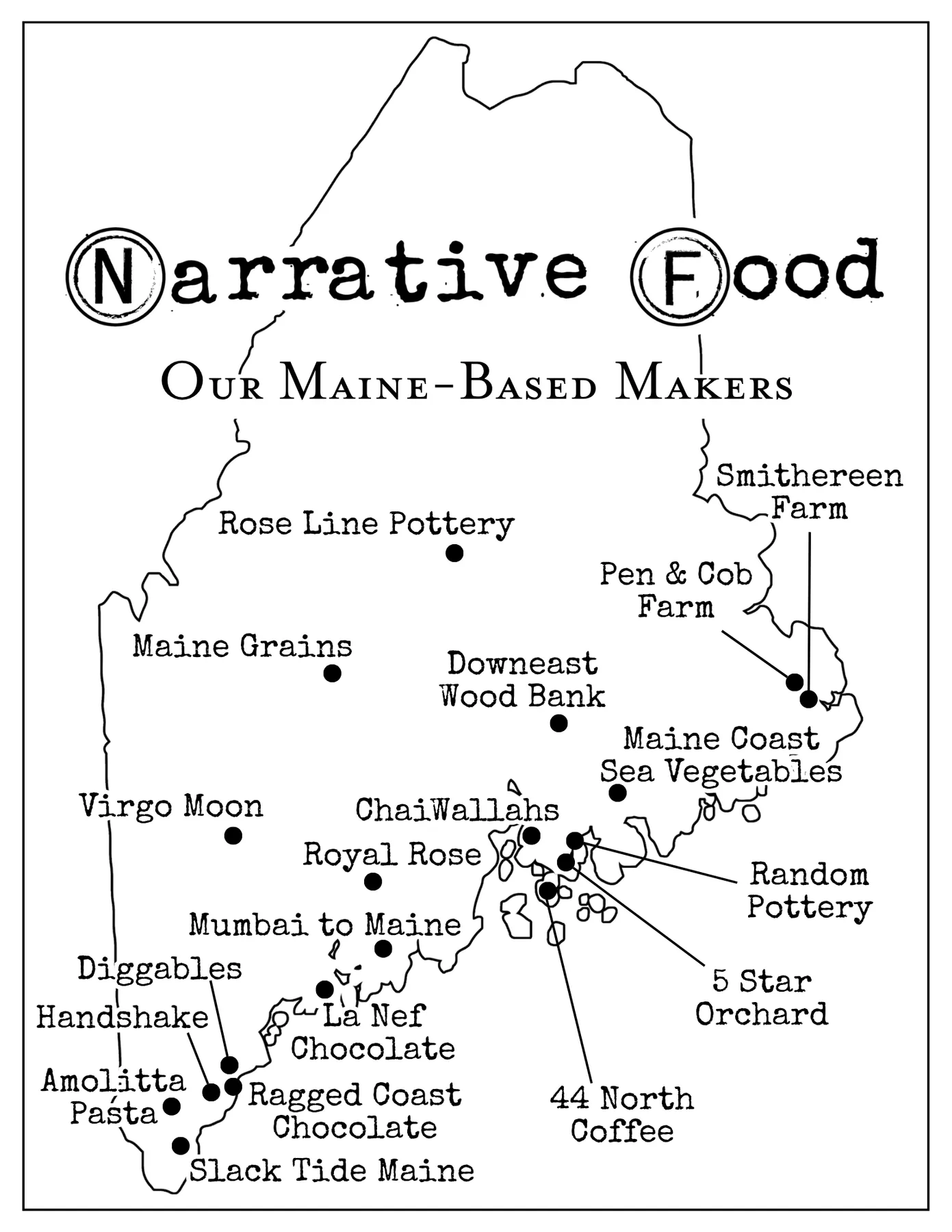
- A series of stories about the impact of food, B Corps, and local Maine. Lartius, Hallie. Narrative Food.
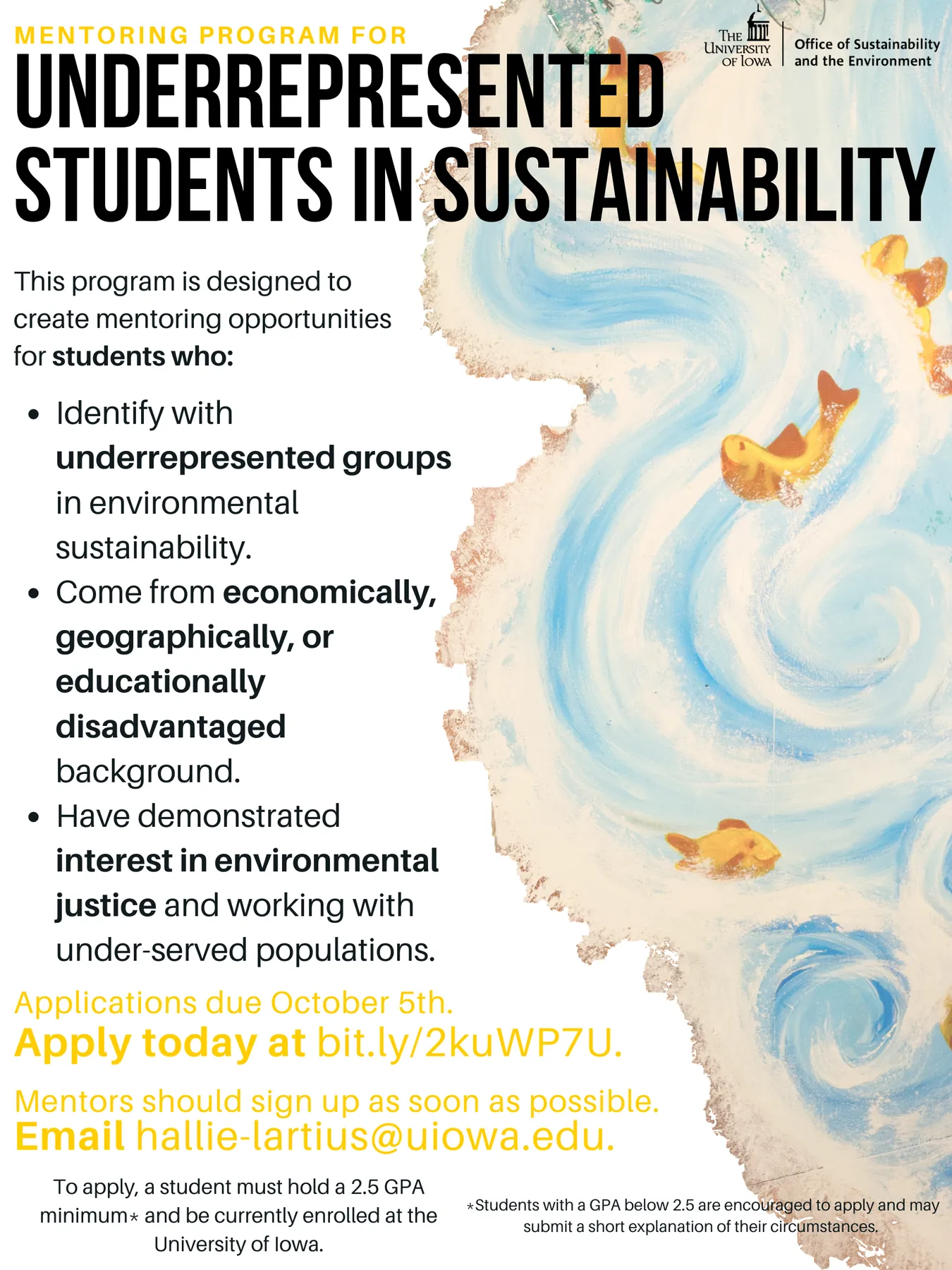
- "Sustainability mentor program to be offered to UI underrepresented students." Fitzpatrick, Annie. Interviewing Lartius, Hallie and Krist, Julia. The Daily Iowan. 2019.
photography
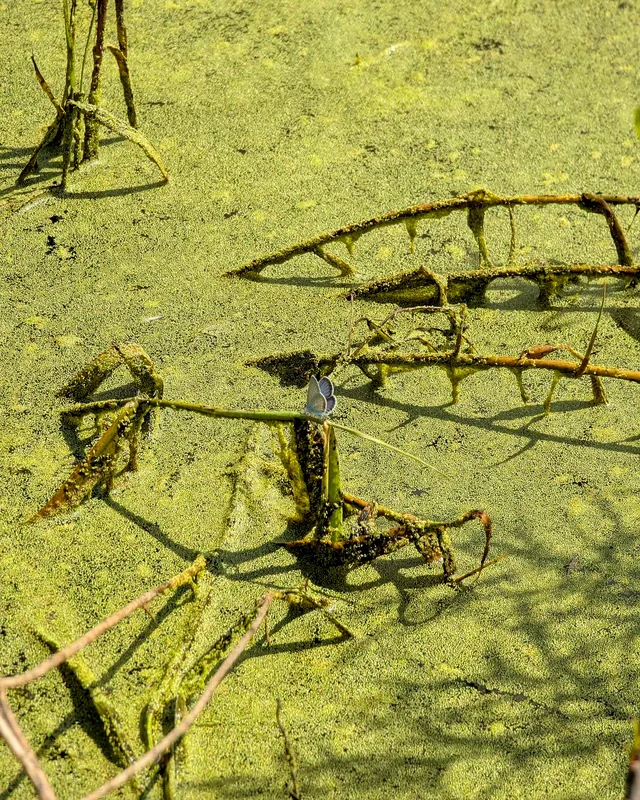
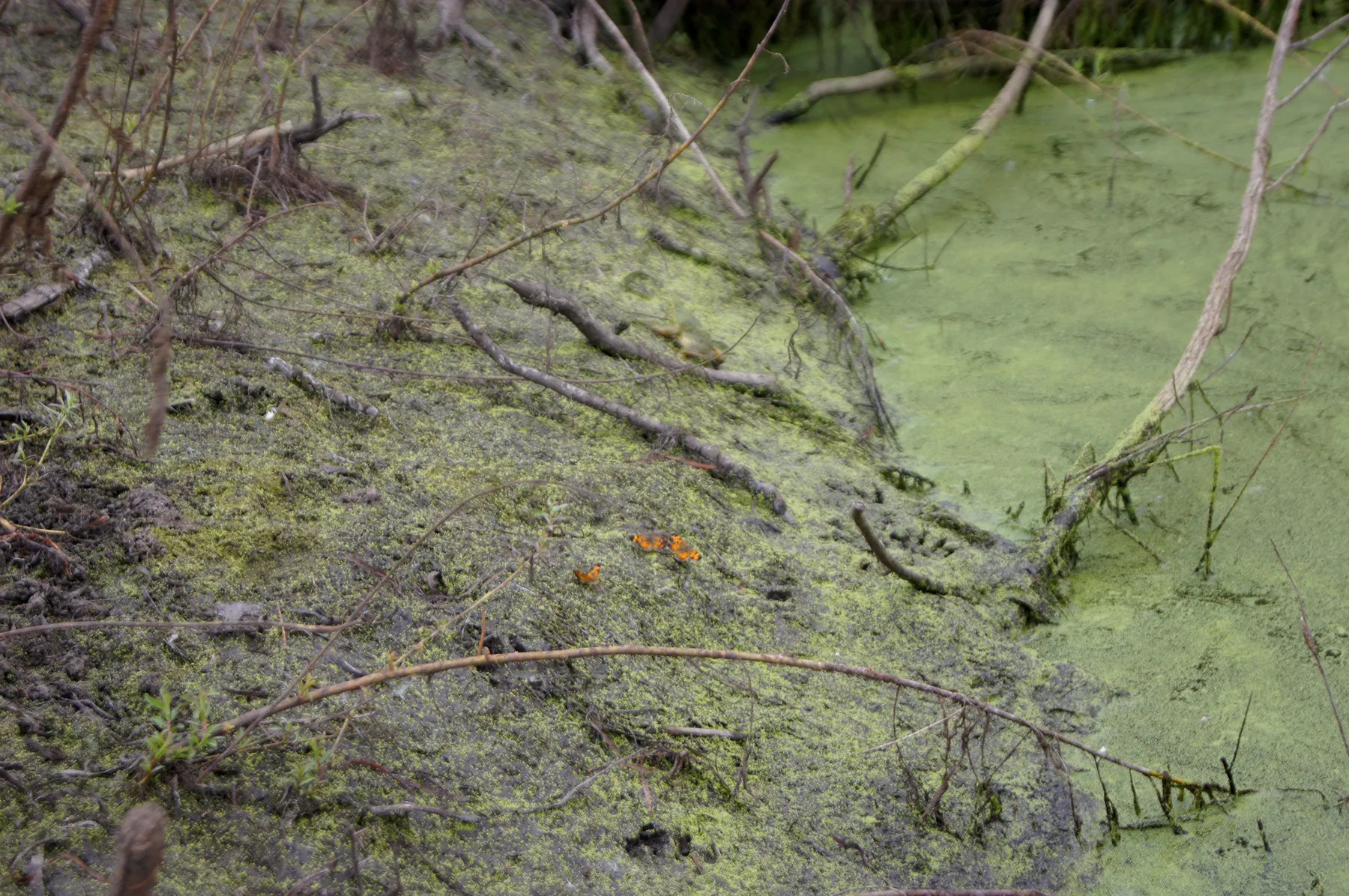
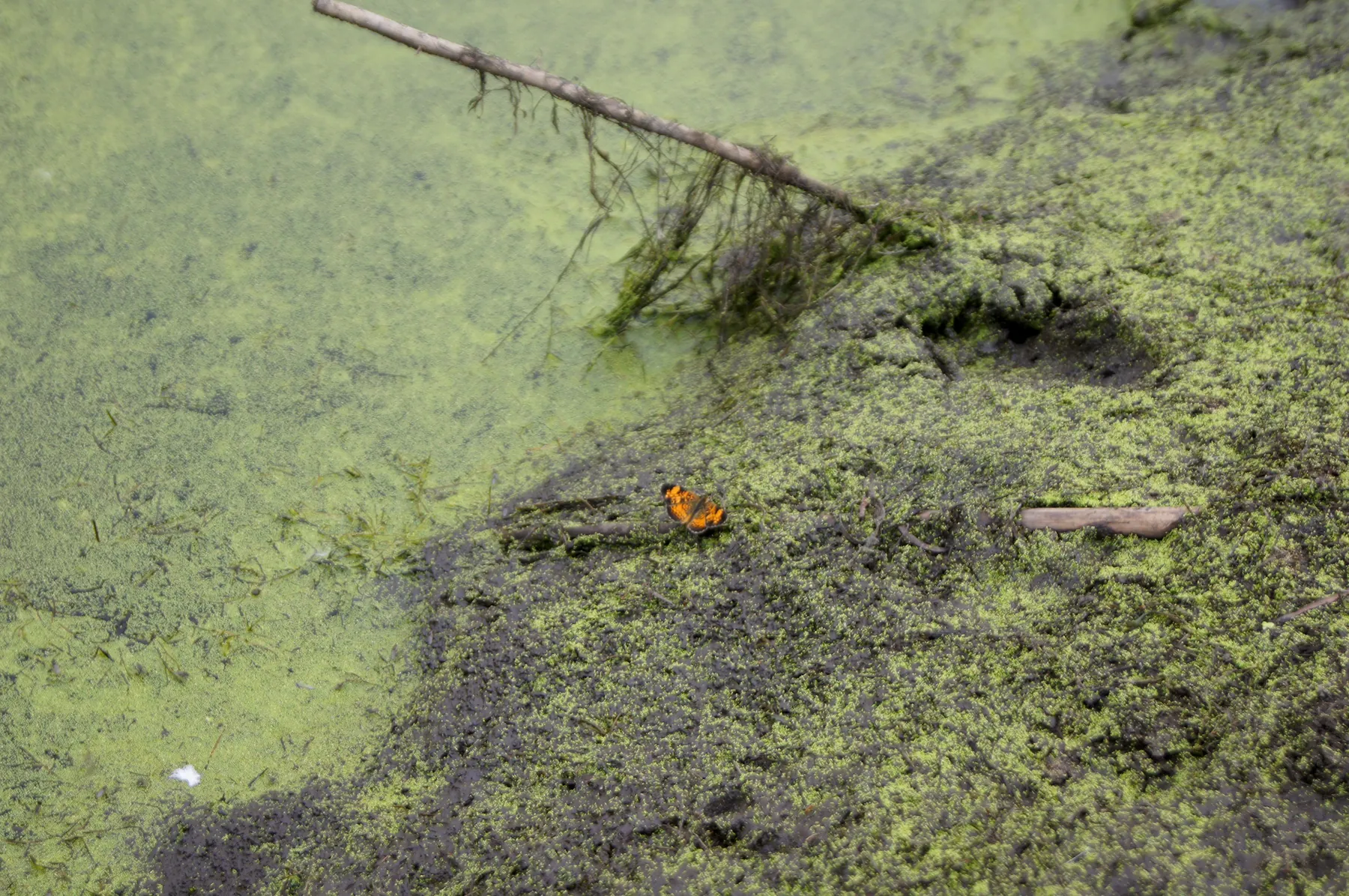
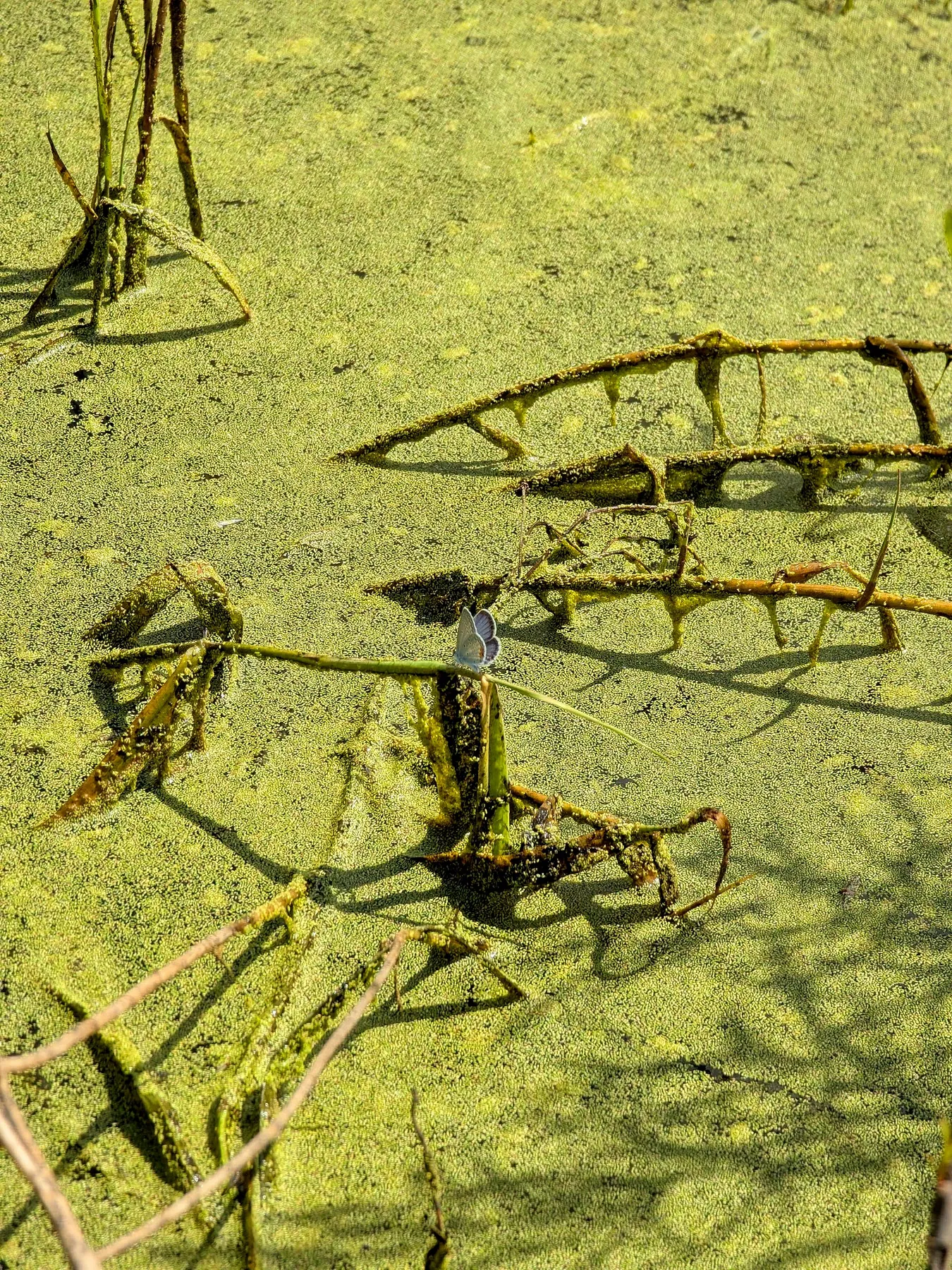
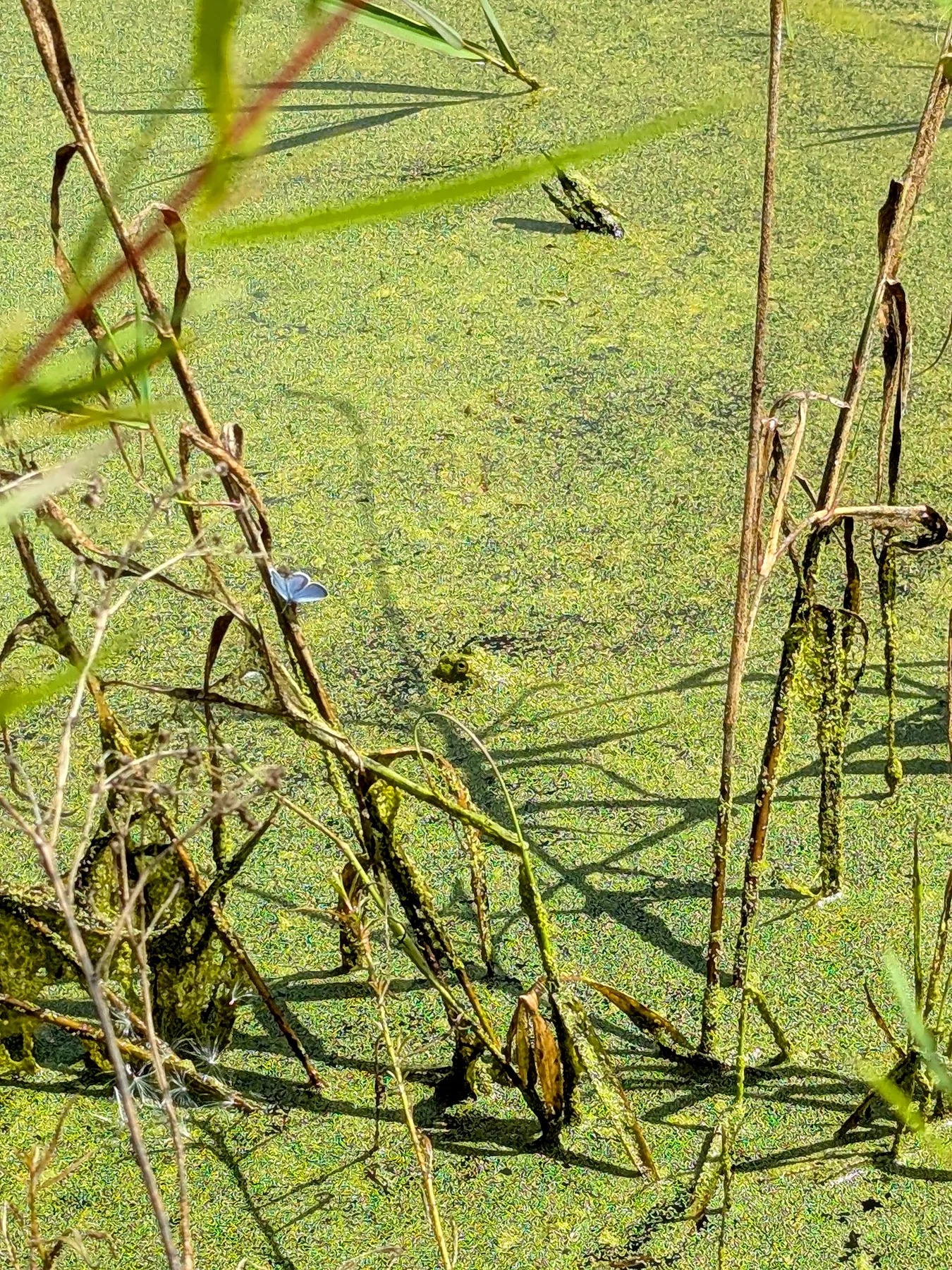
pond in early morning and pond at high sun
I was raised on the same land as my father, an acre of woods and prairie surrounded by miles of cornfields. I've always loved how green it all becomes in the summer, but there are too many days when crop-dusters are spraying chemicals overhead and it's not safe to be outside at all. When I could, I would spend hours sitting on the bank of a shallow pond right in the middle of the land. First, I wanted to catch a frog. When I realized that was impossible, I became determined to see a tadpole become a frog. Fifteen years later, I came home for an M.S. in Agricultural Economics at ISU, and I found myself down at the pond again. Like most water in Iowa, it is experiencing severe eutrophication. (Eutrophication is defined as an excessive richness of nutrients in a body of water, frequently due to runoff from the land, which causes a dense growth of plant life and death of animal life from lack of oxygen.) I think it makes the most beautiful shade of green, the color of life in excess…, but I can't see the tadpoles anymore.
Hallie Lartius is pursuing an M.S. in Agricultural Economics at Iowa State University. Raised in farm country somewhere between Ames and Boone, she moved "away" for six years to work in food security, local food systems, and the role of farming in rural development. She returned to Iowa State in fall 2025 to study the economics behind her experiences. Through research — and photography, she continues trying to understand the place that she came from and where she might go next.
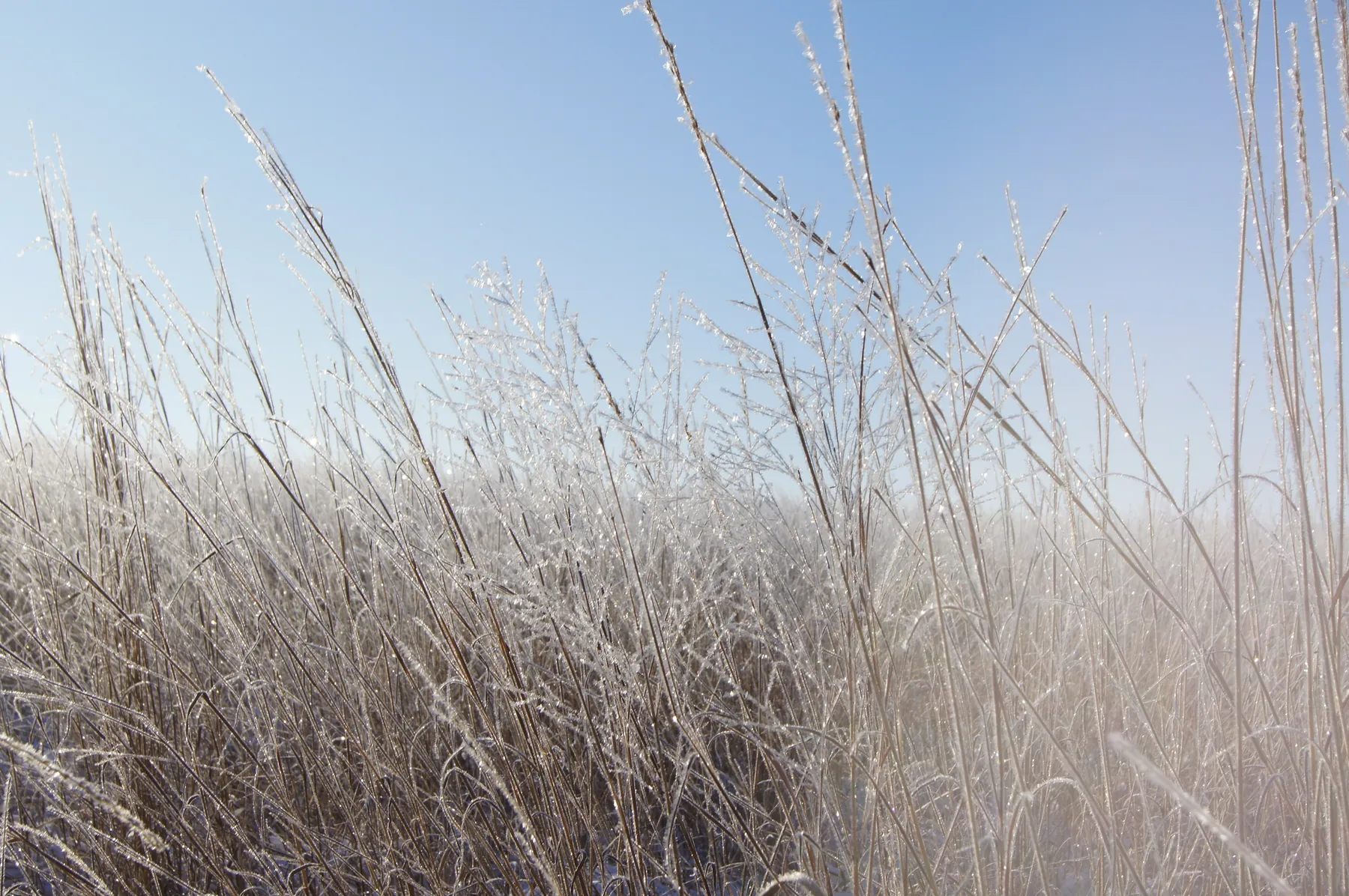
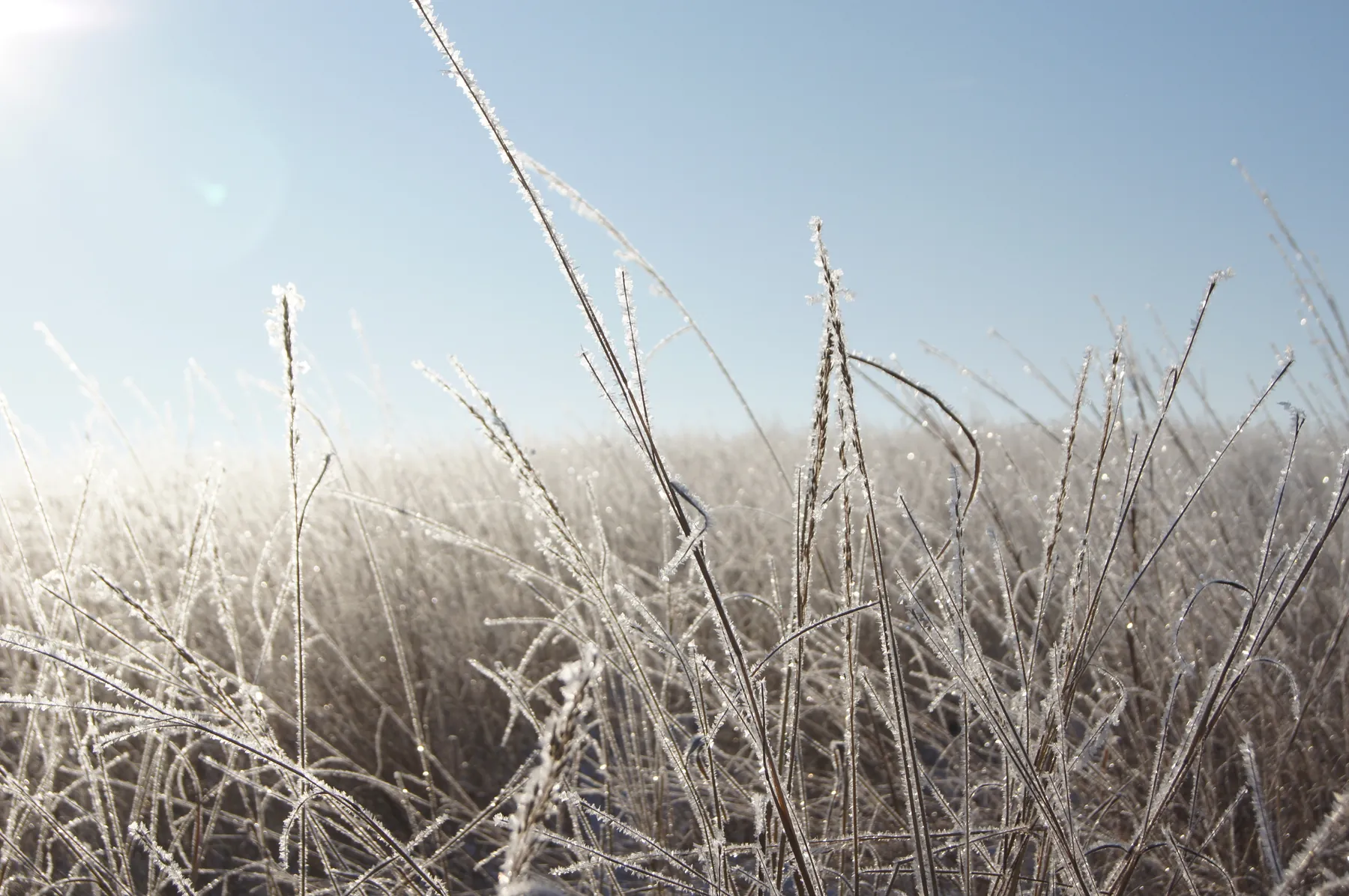
prairie frost
one of my favorite sights in Iowa.
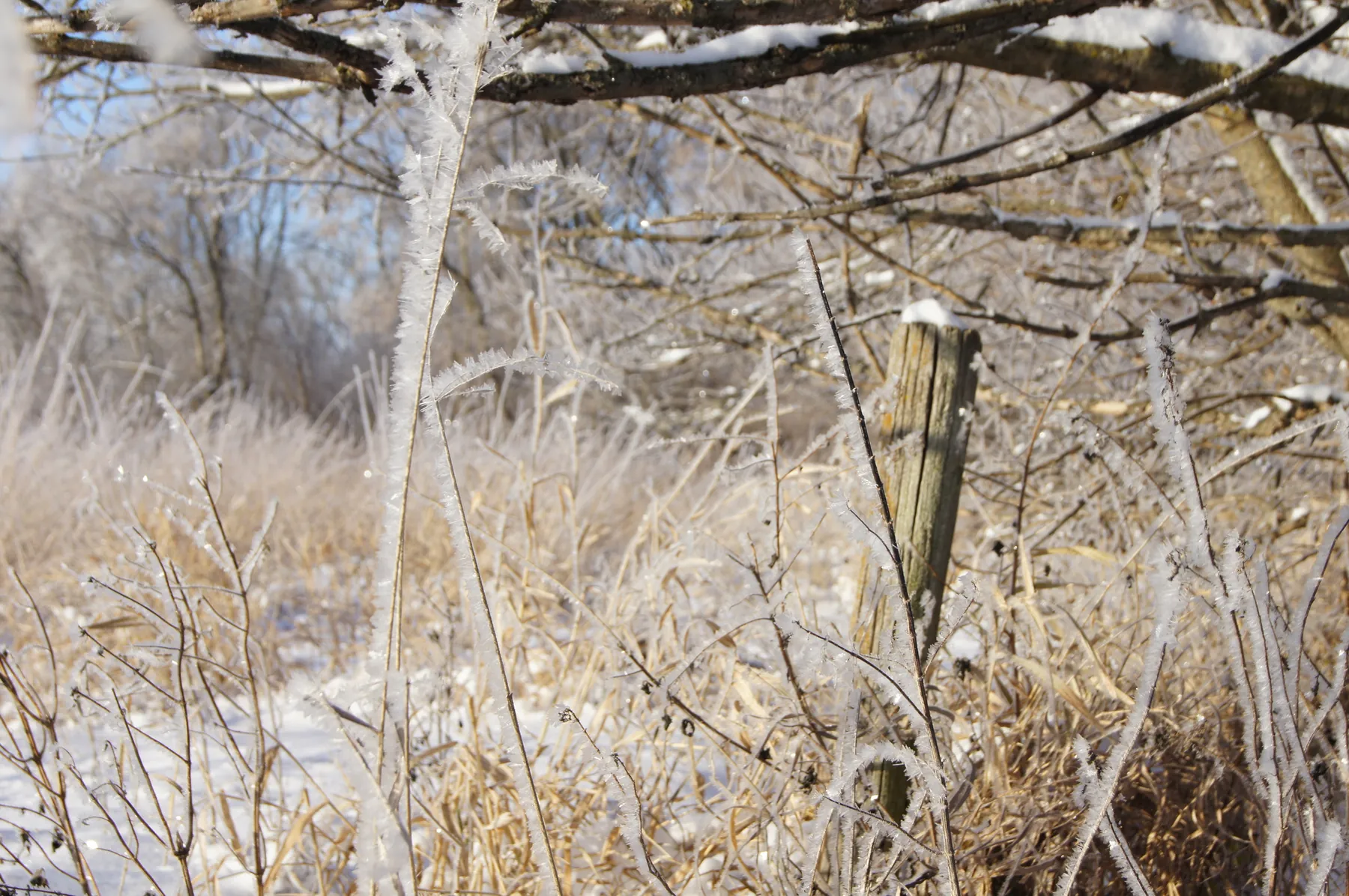
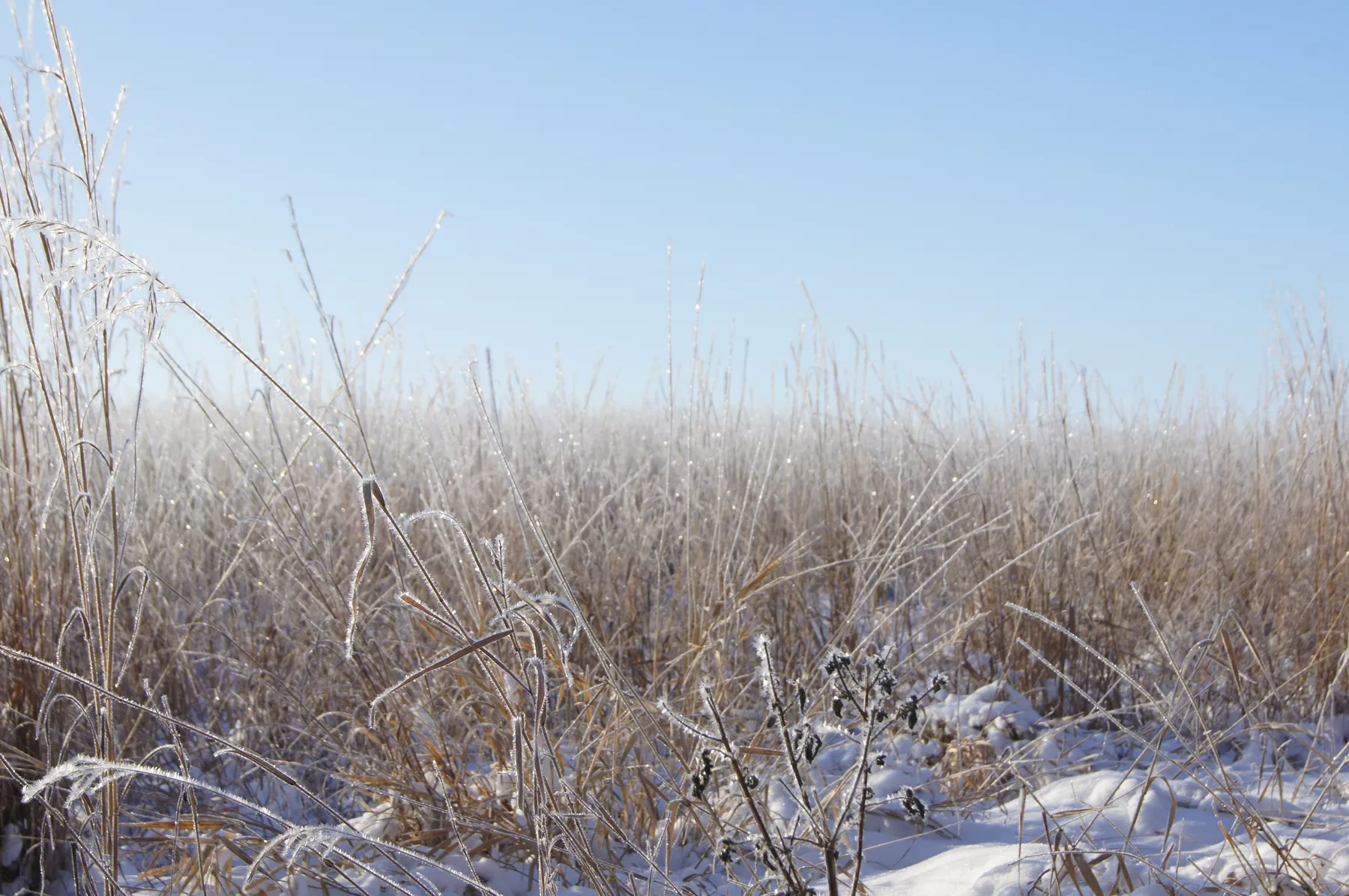

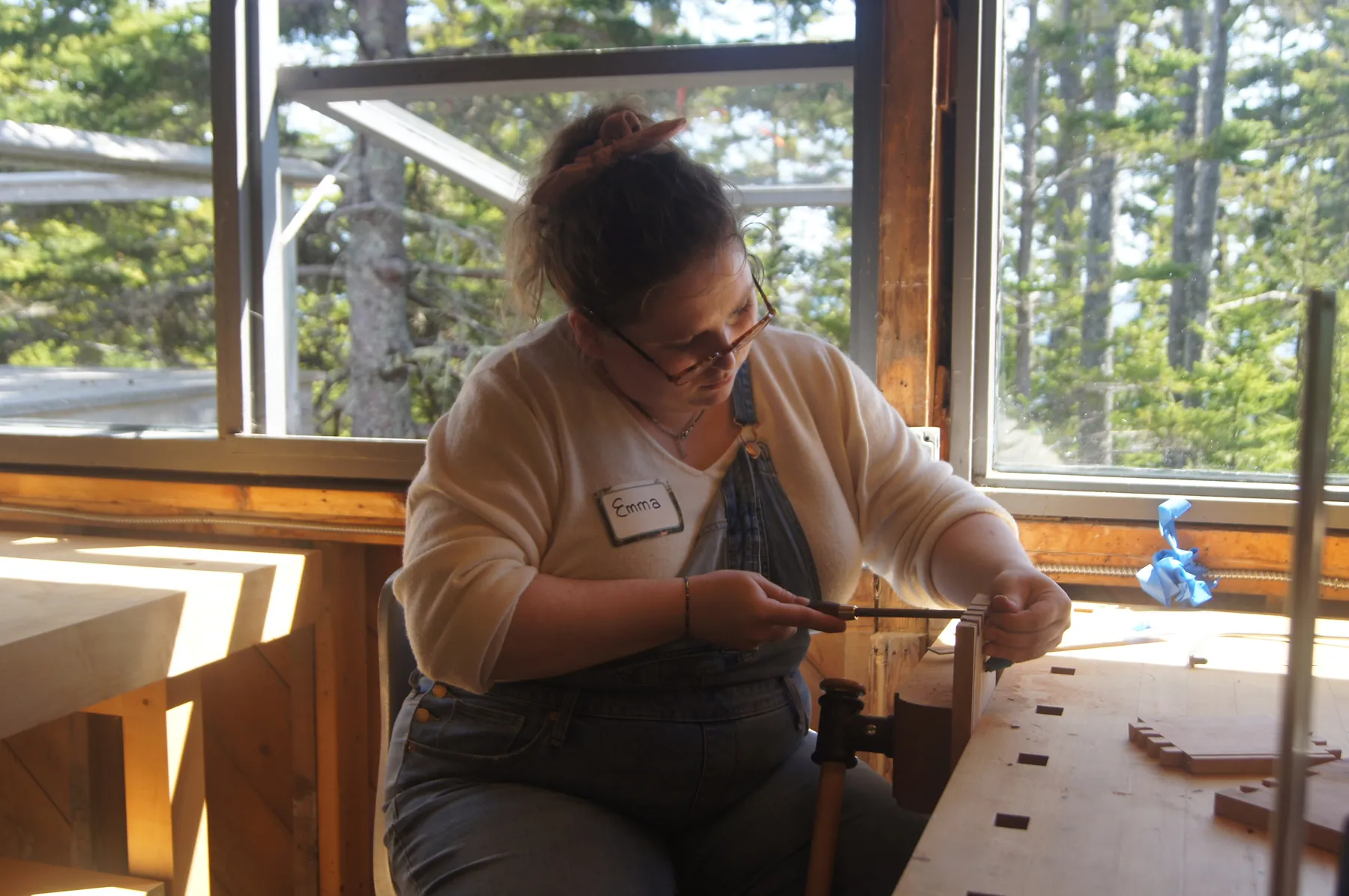
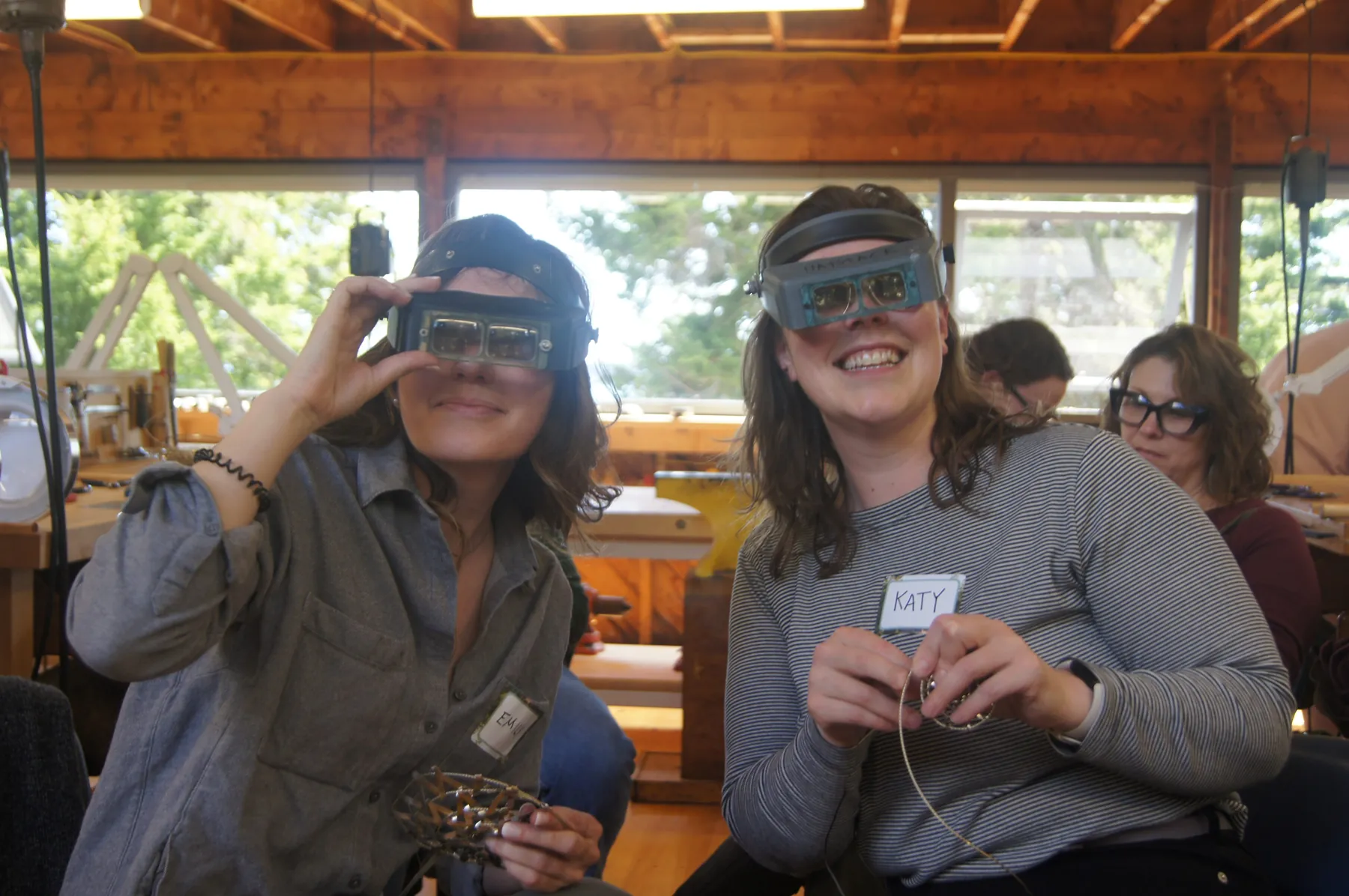
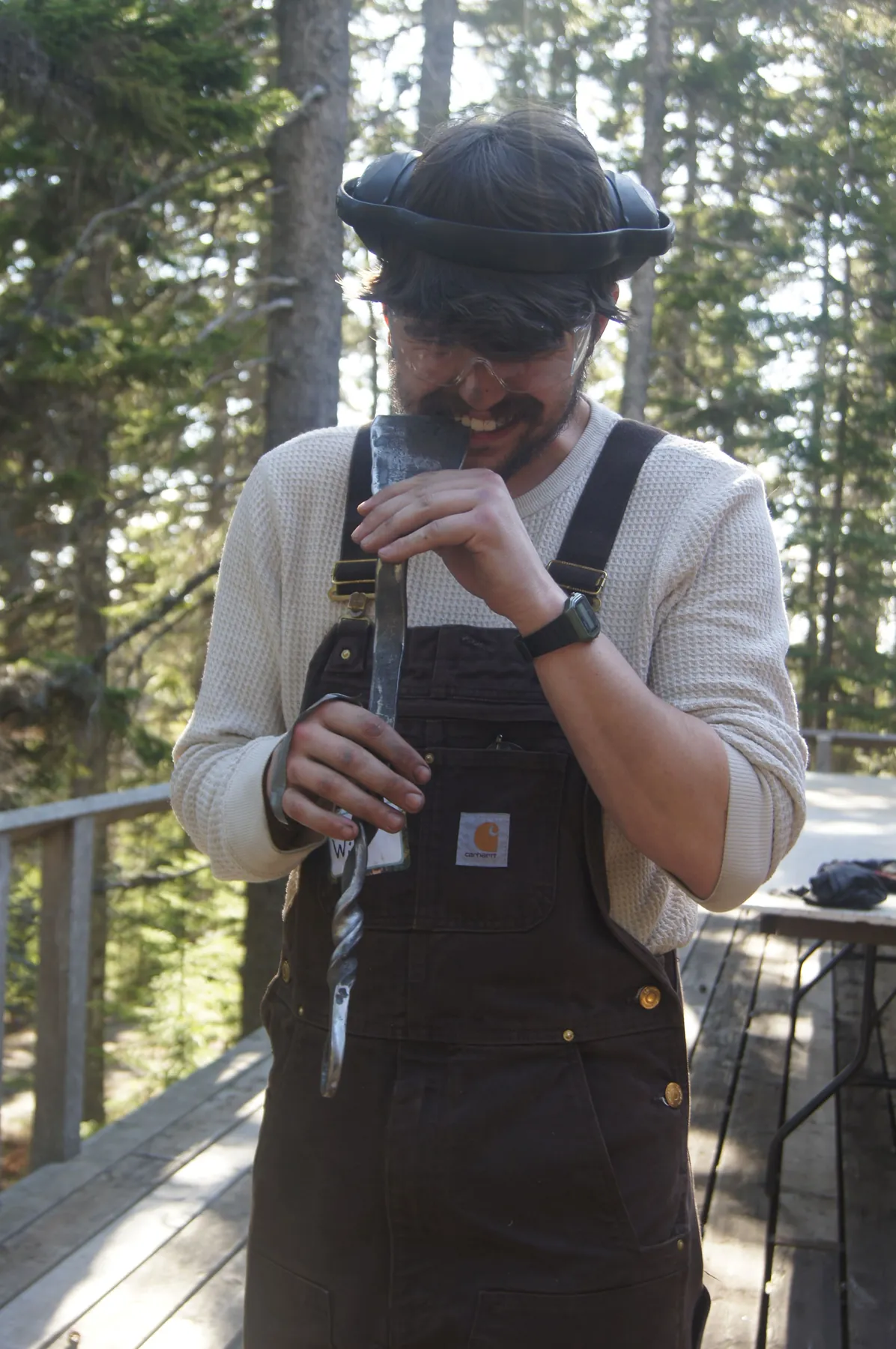
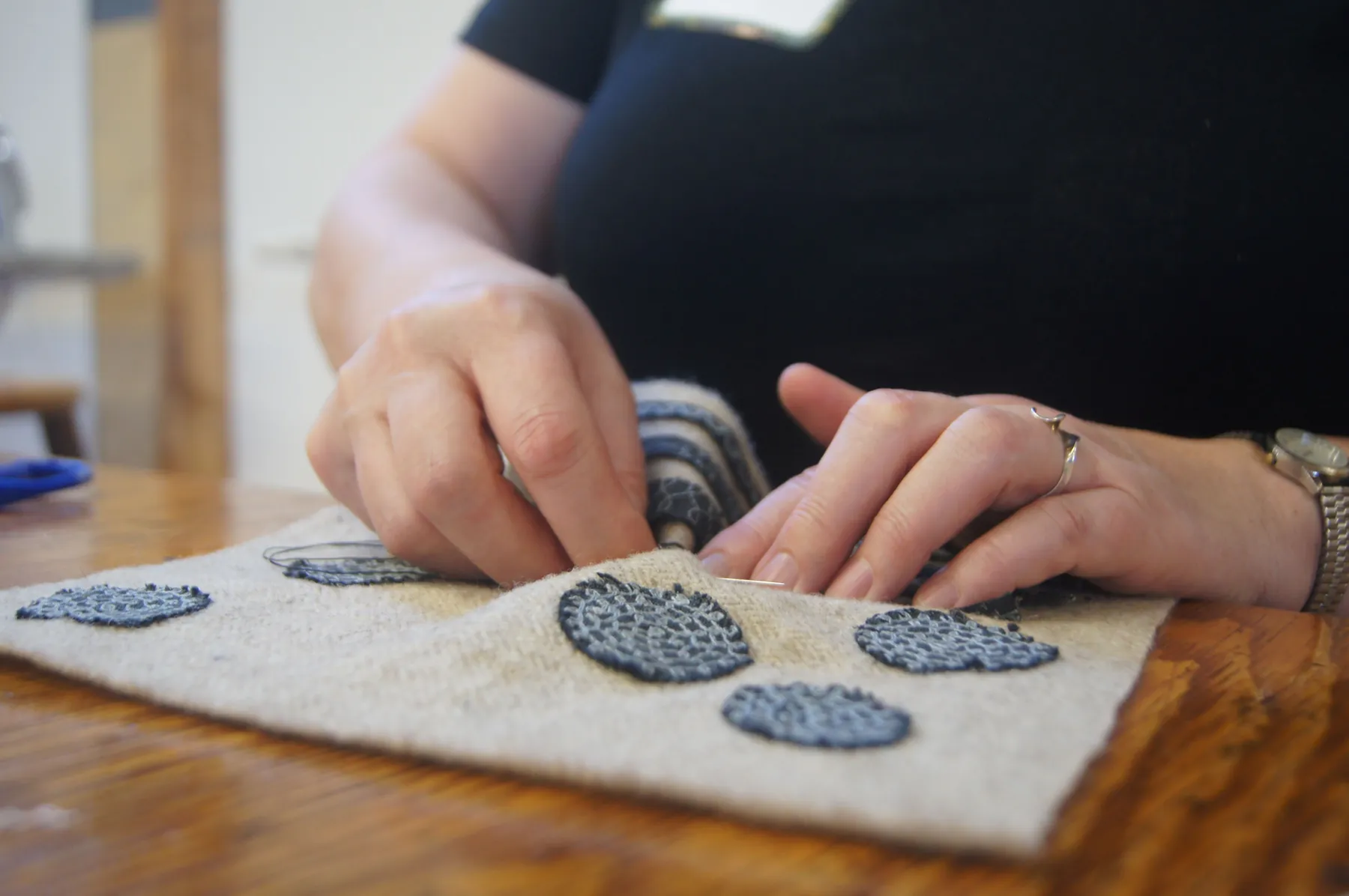
haystack school of arts & crafts
island workshop day 2023; unedited
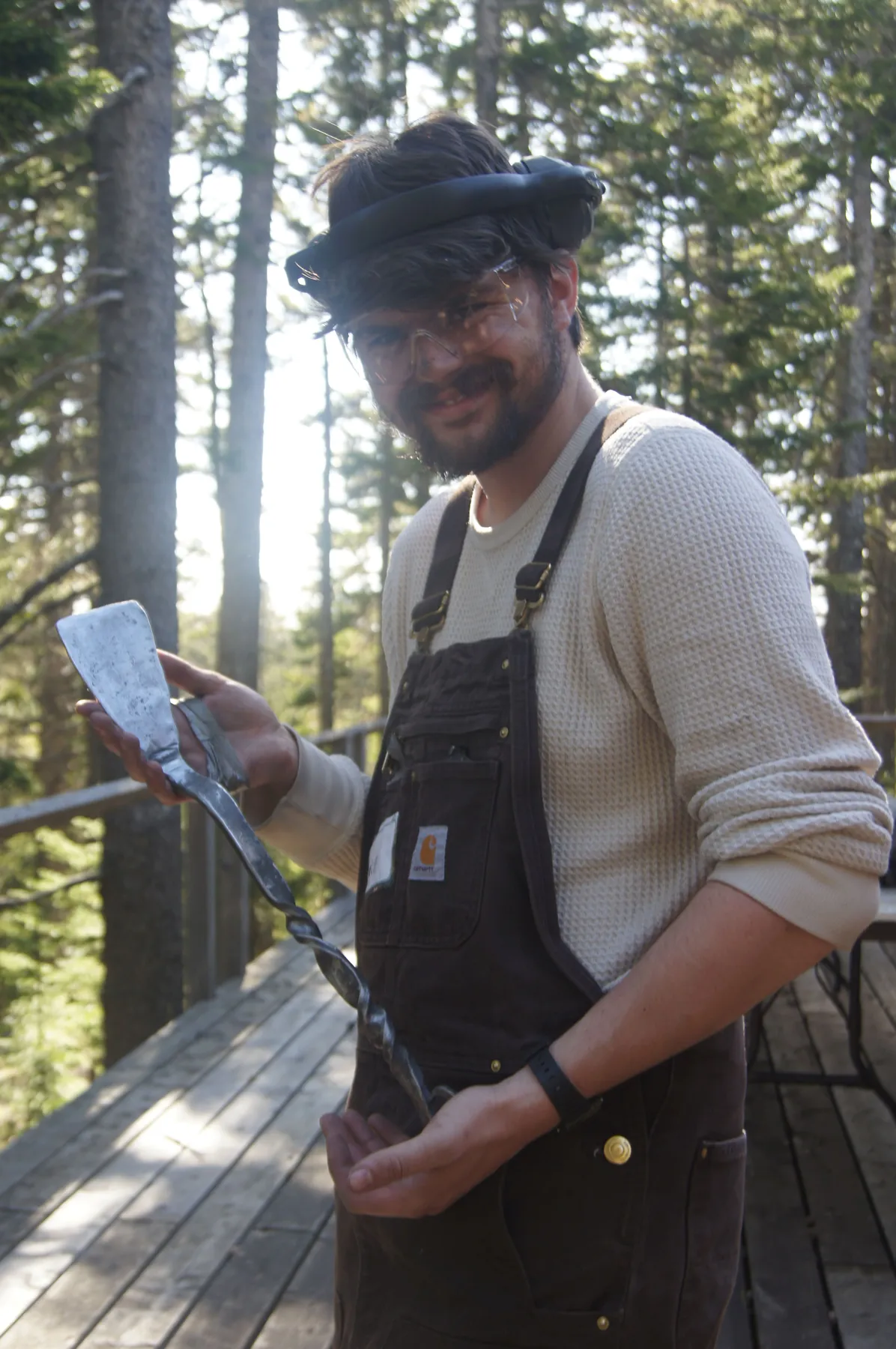
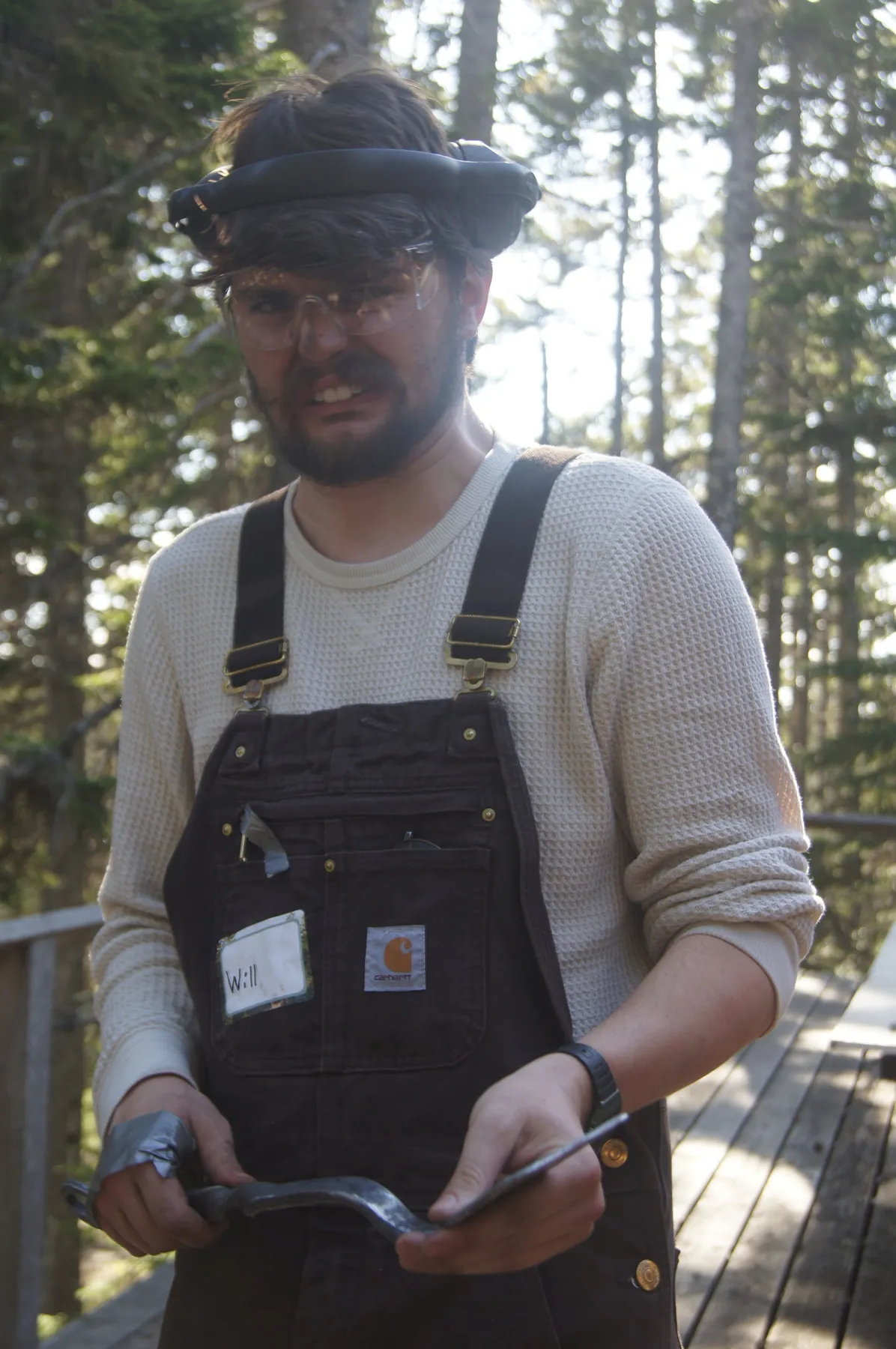
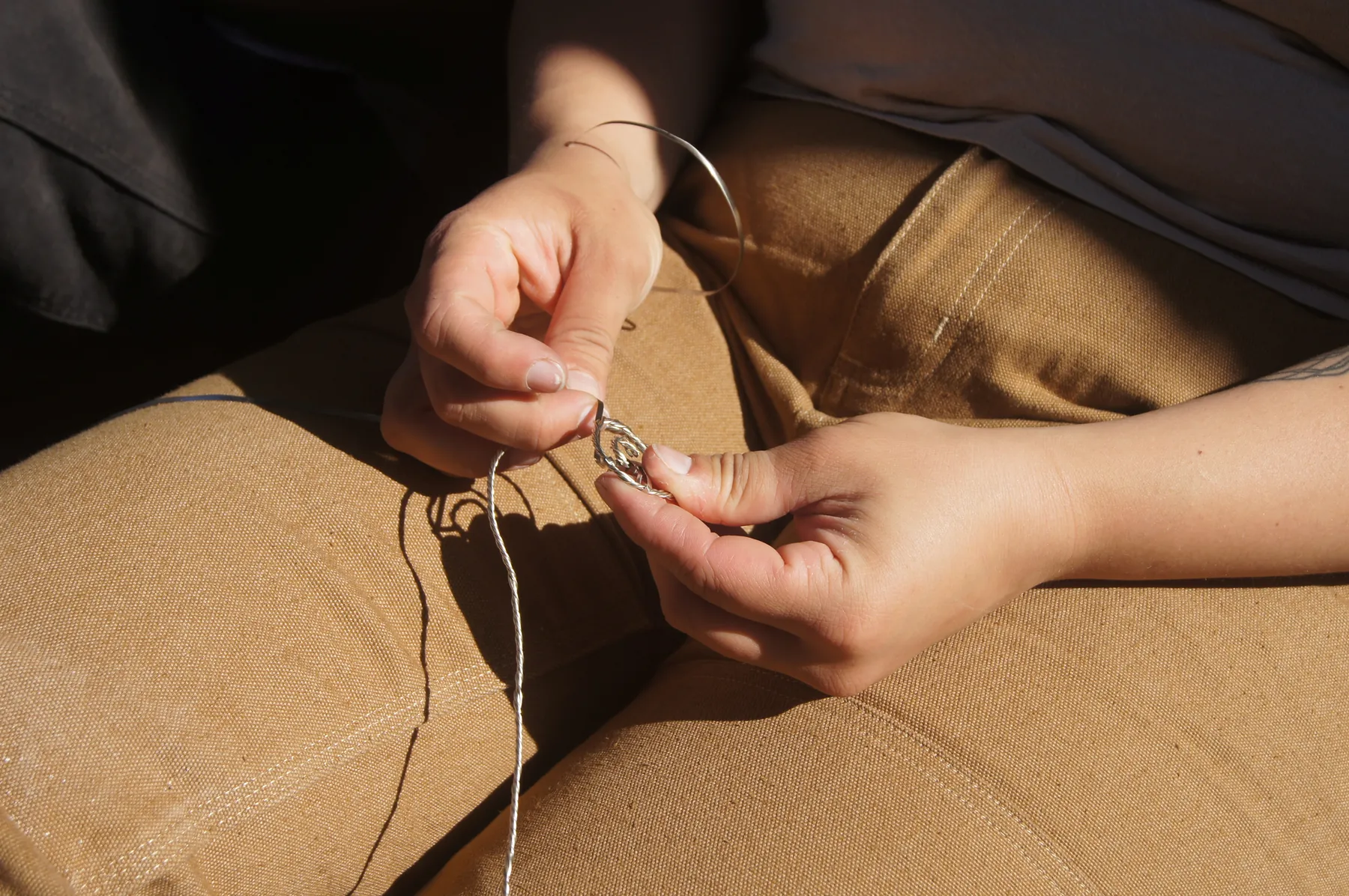
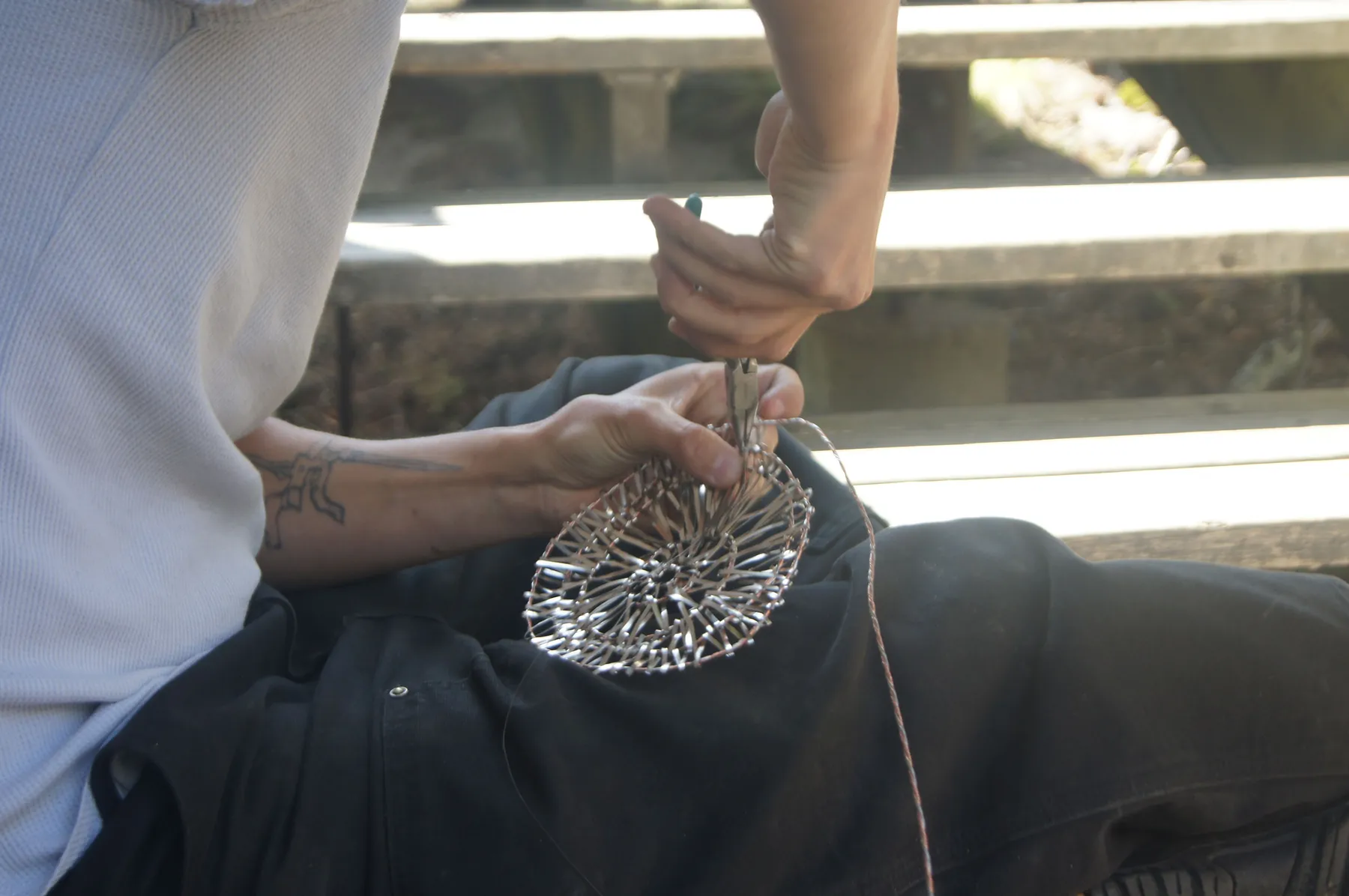
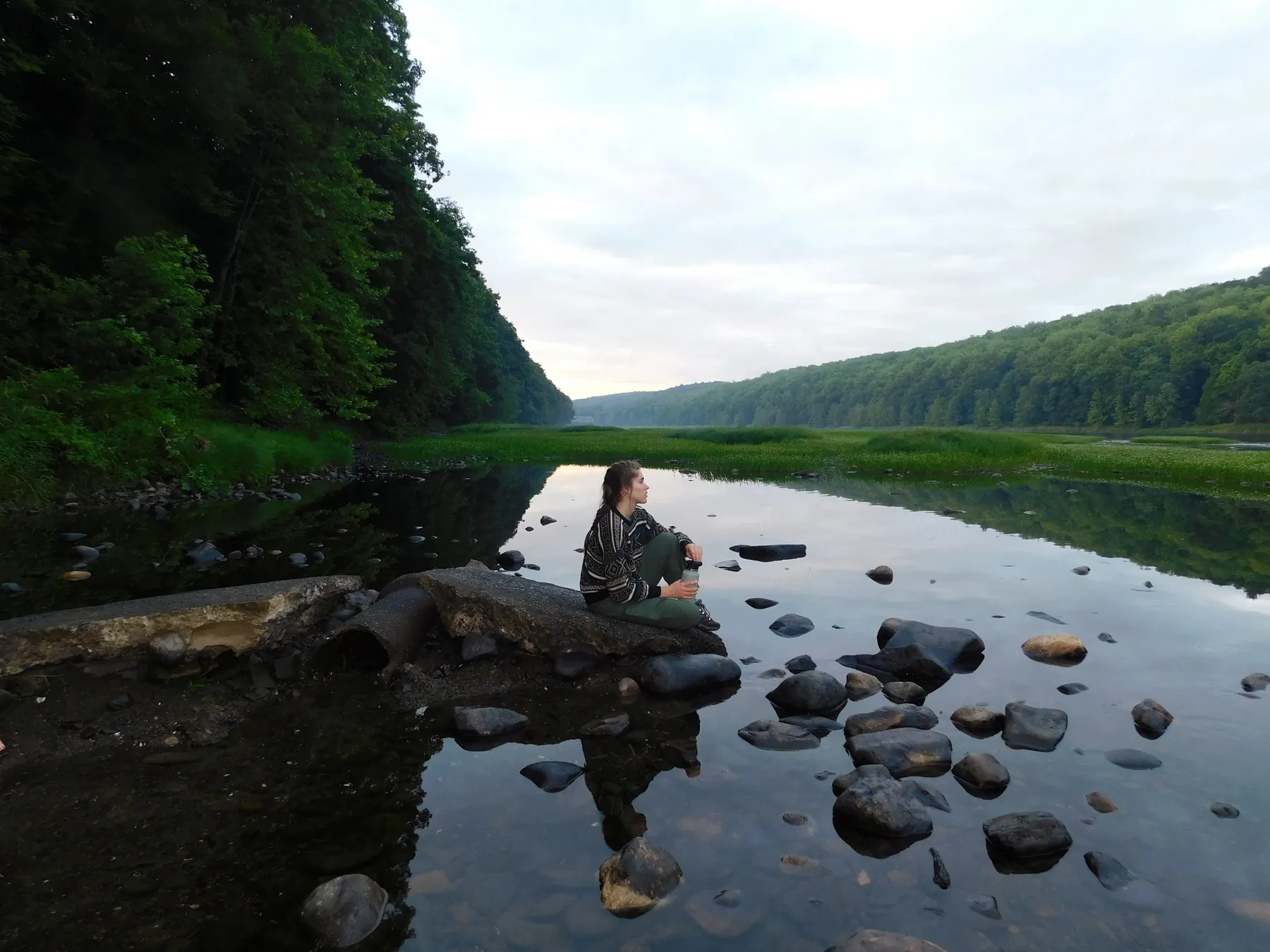
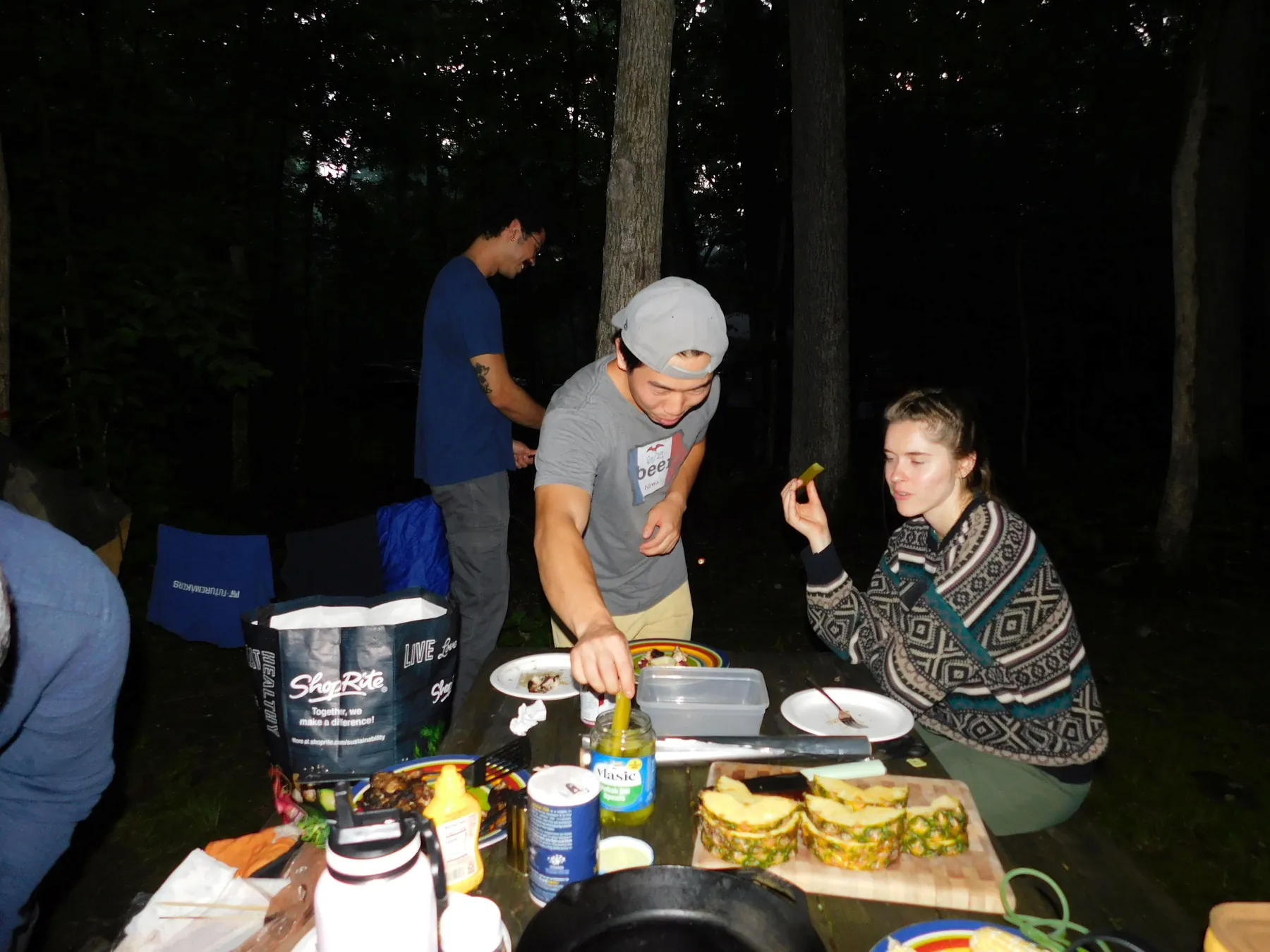
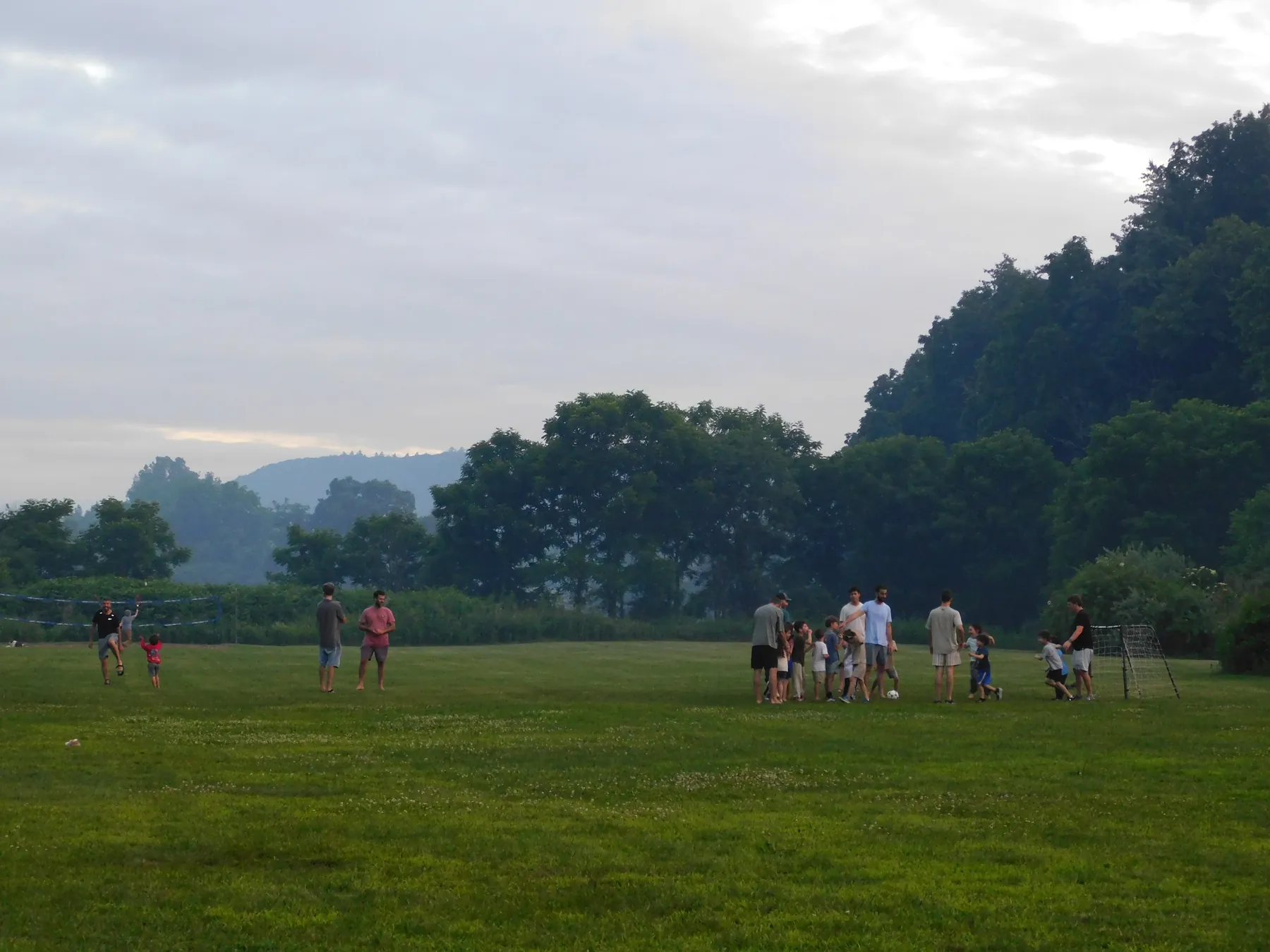
untitled friends and family
a little bit of everything.




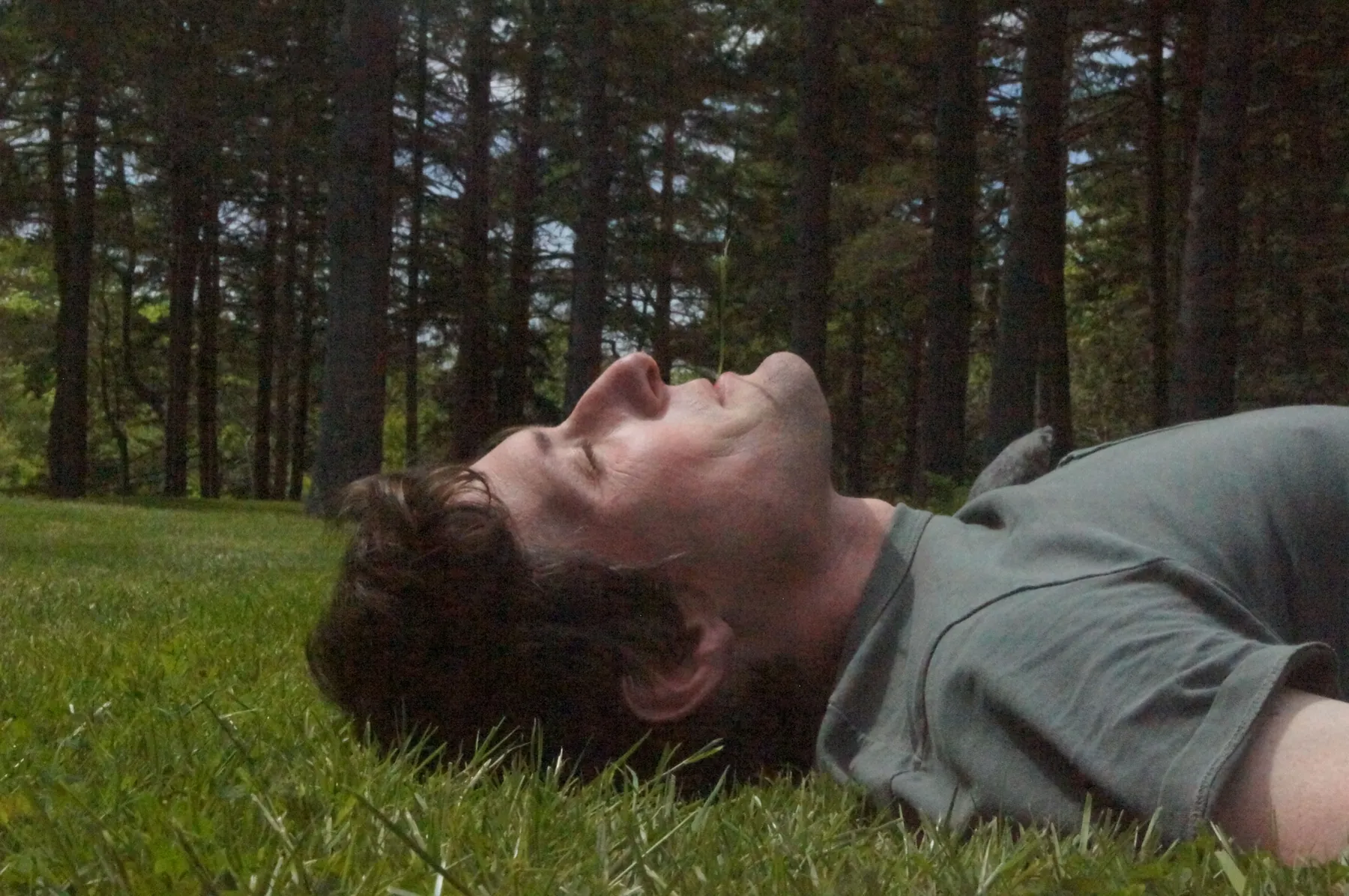
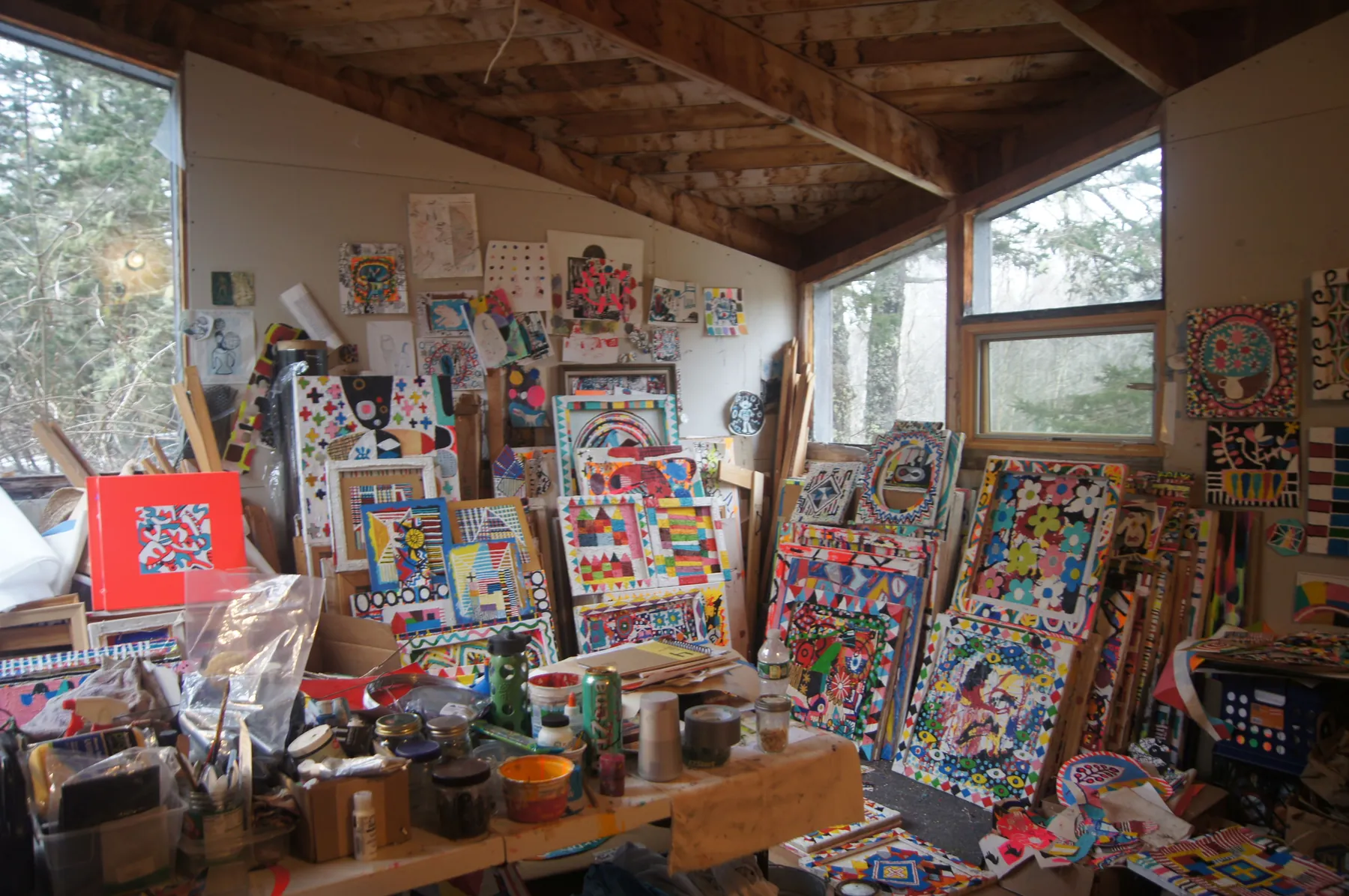
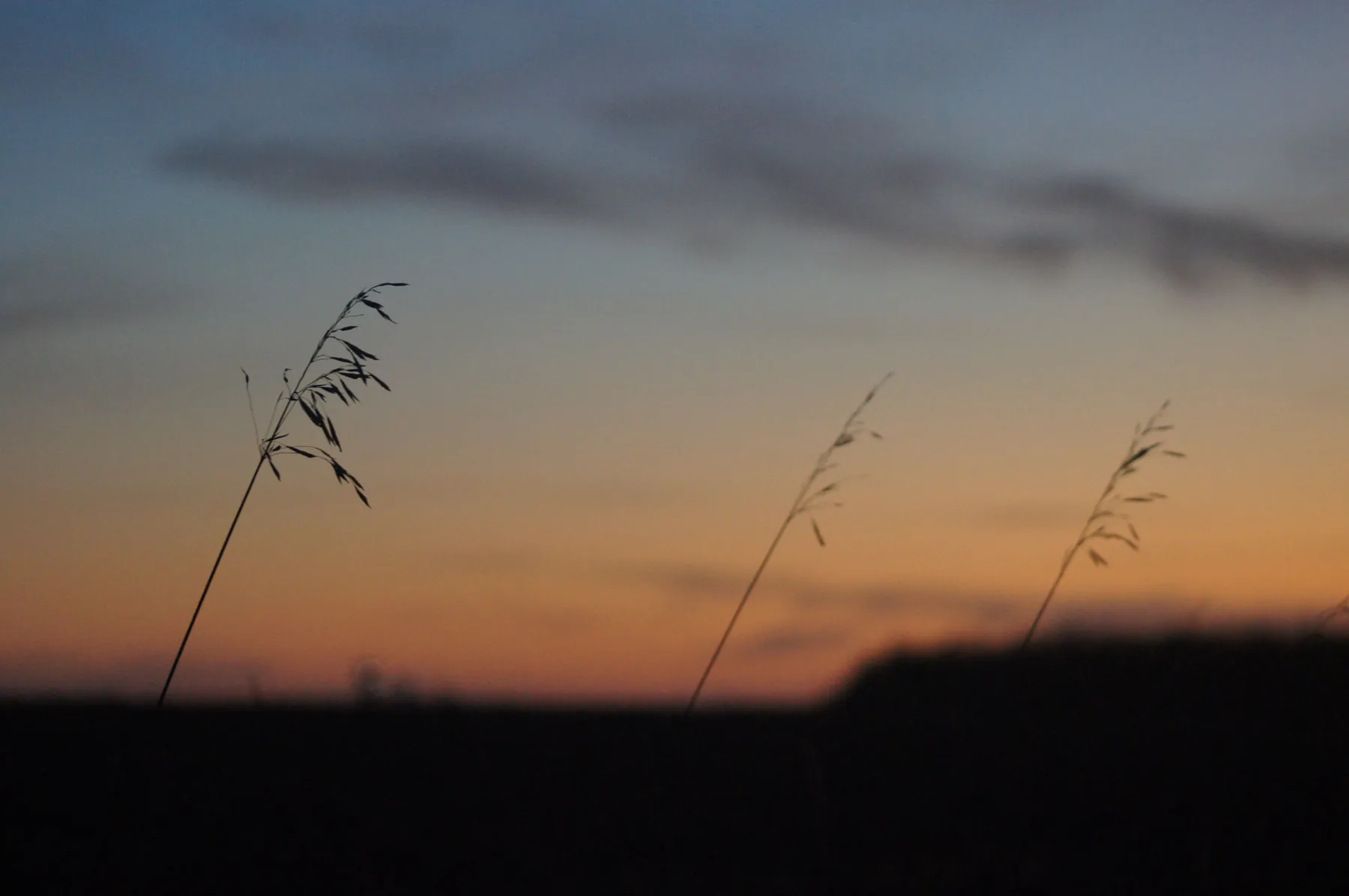

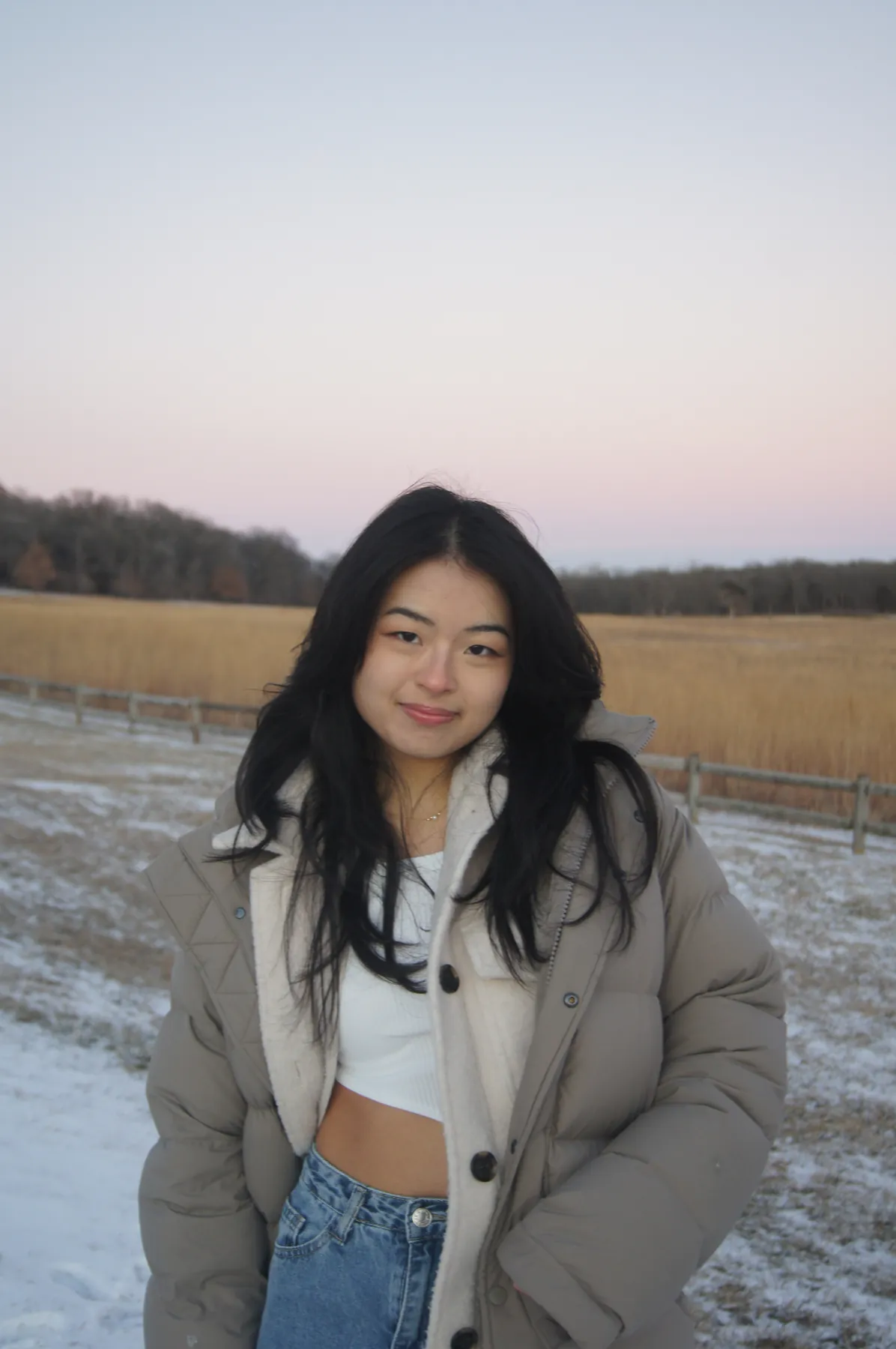
design
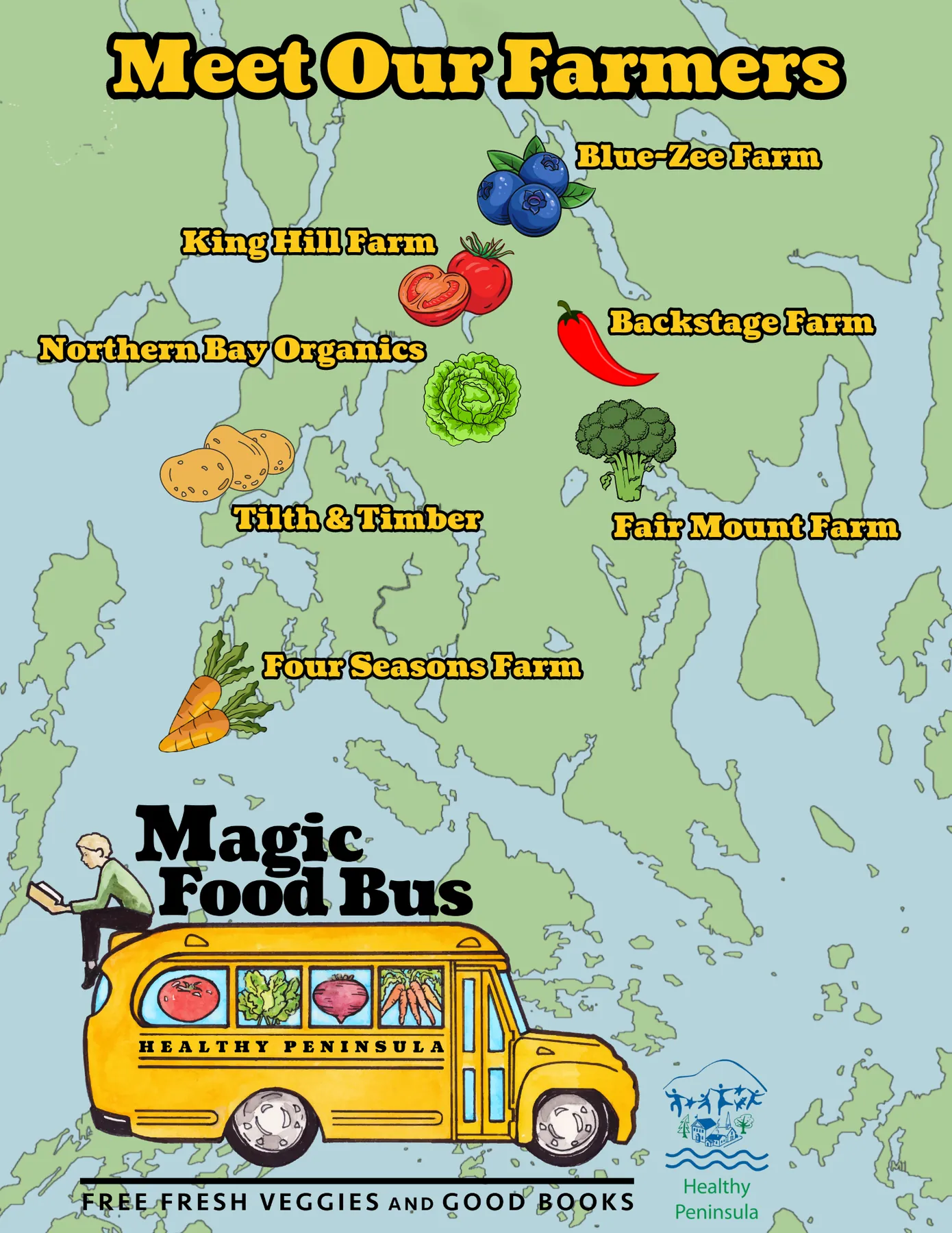
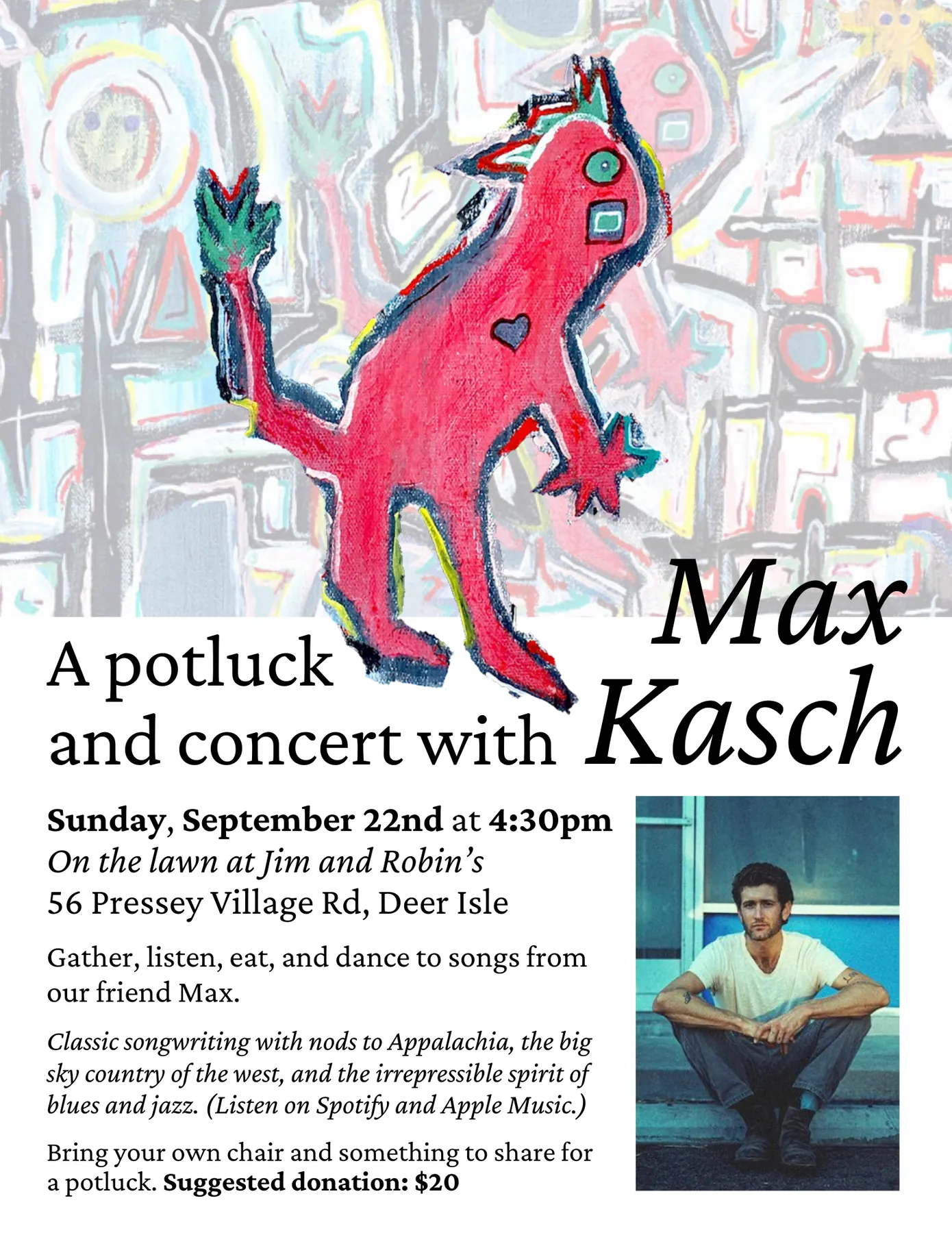
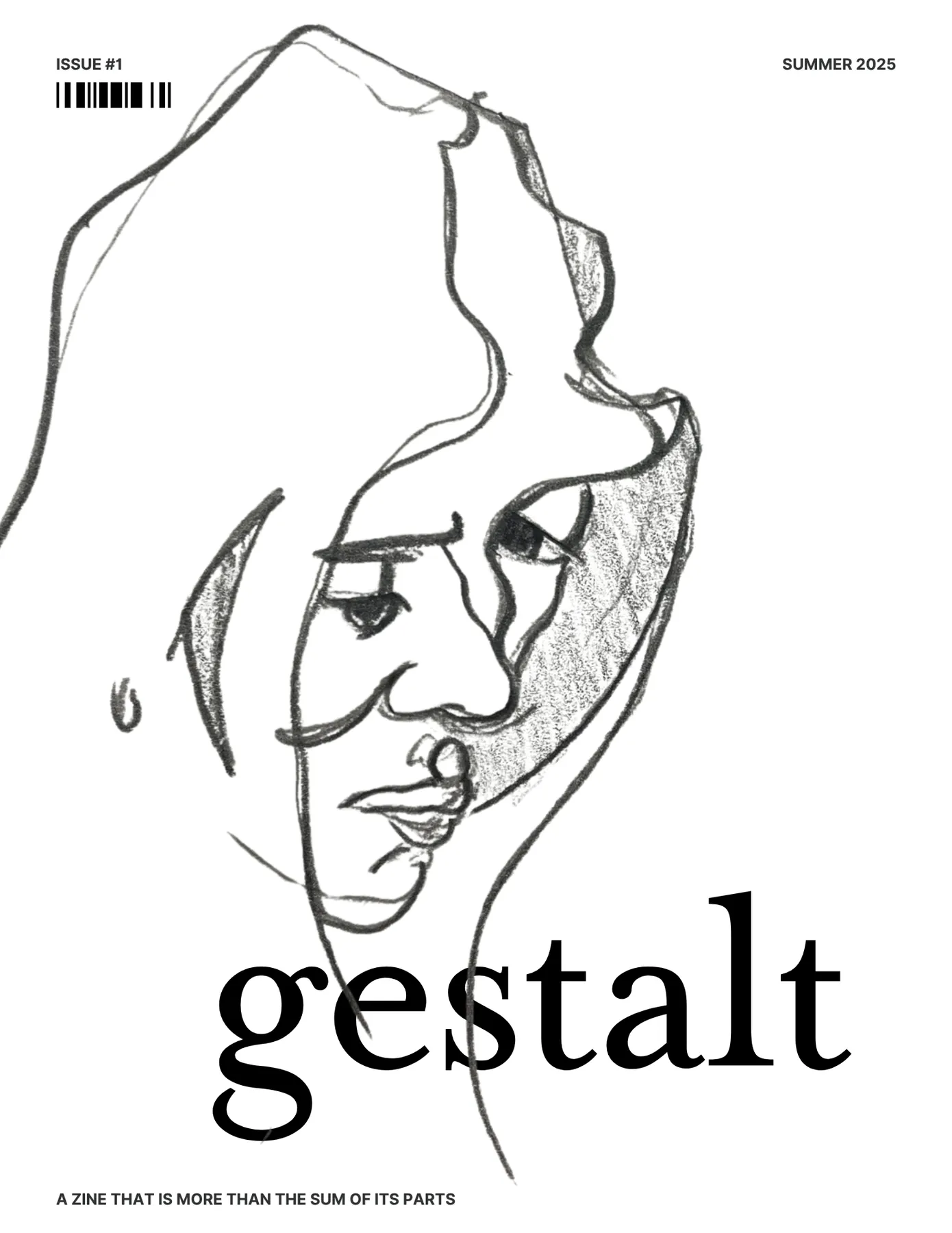
samples of past design work. my favorite projects adapt aspects of physical media (paintings, drawings, photos) for digital use.
nonprofit farm cooperative
a collaborative model for supporting farmers and their communities
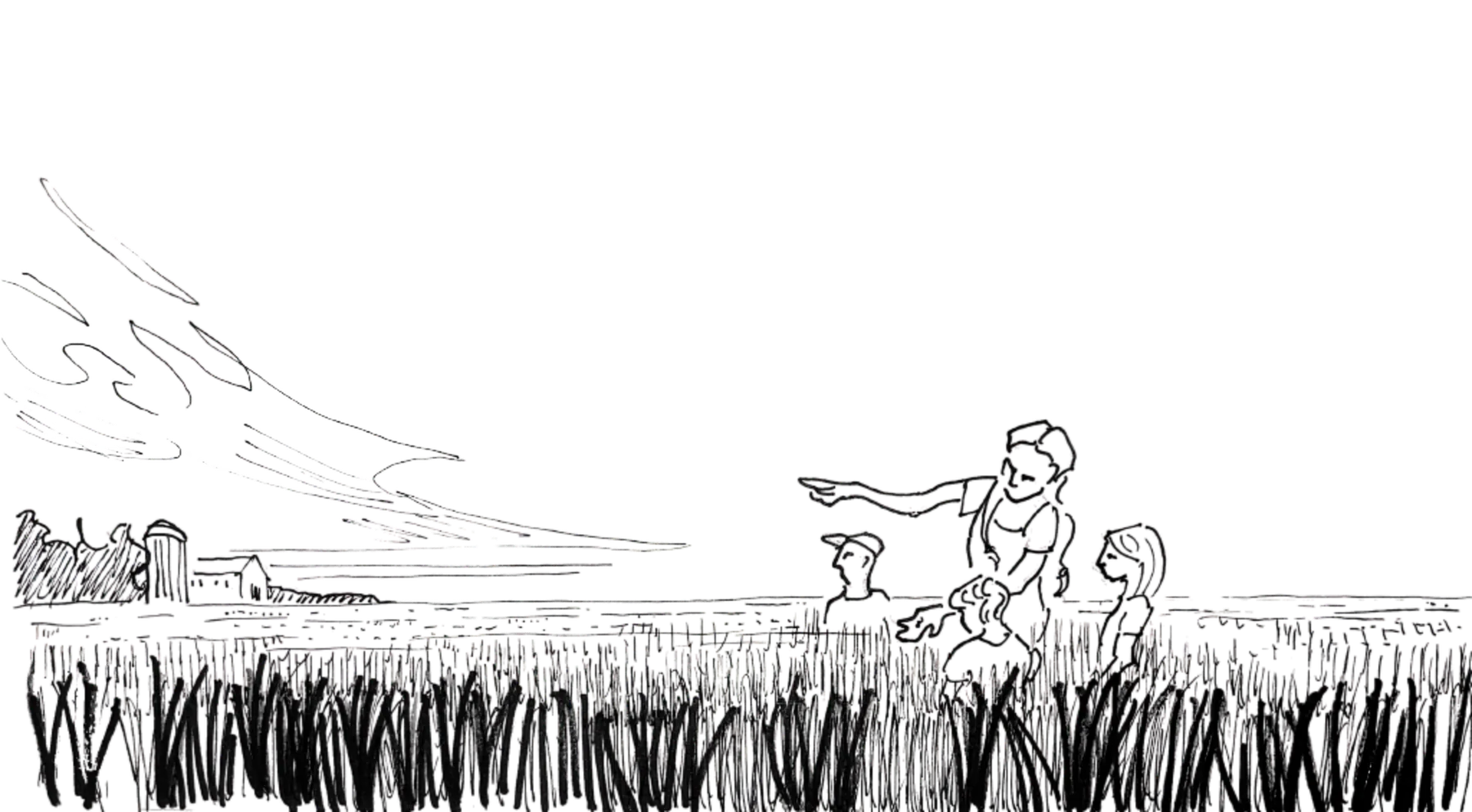
Small farms provide essential services—fresh food, education, community connection—but traditional food security programs often leave farmers unpaid and unsupported. This nonprofit-cooperative model enables community practitioners to leverage local farms to strengthen food security while building resilient rural food systems.
the problem
Small farms play a vital role in rural communities, creating social, economic, and environmental benefits. But as costs rise and revenues drop, the smallest farms are closing.
Farms could help—they're uniquely positioned to fight food insecurity sustainably while uplifting their communities.
They just need support to do it.
the solution
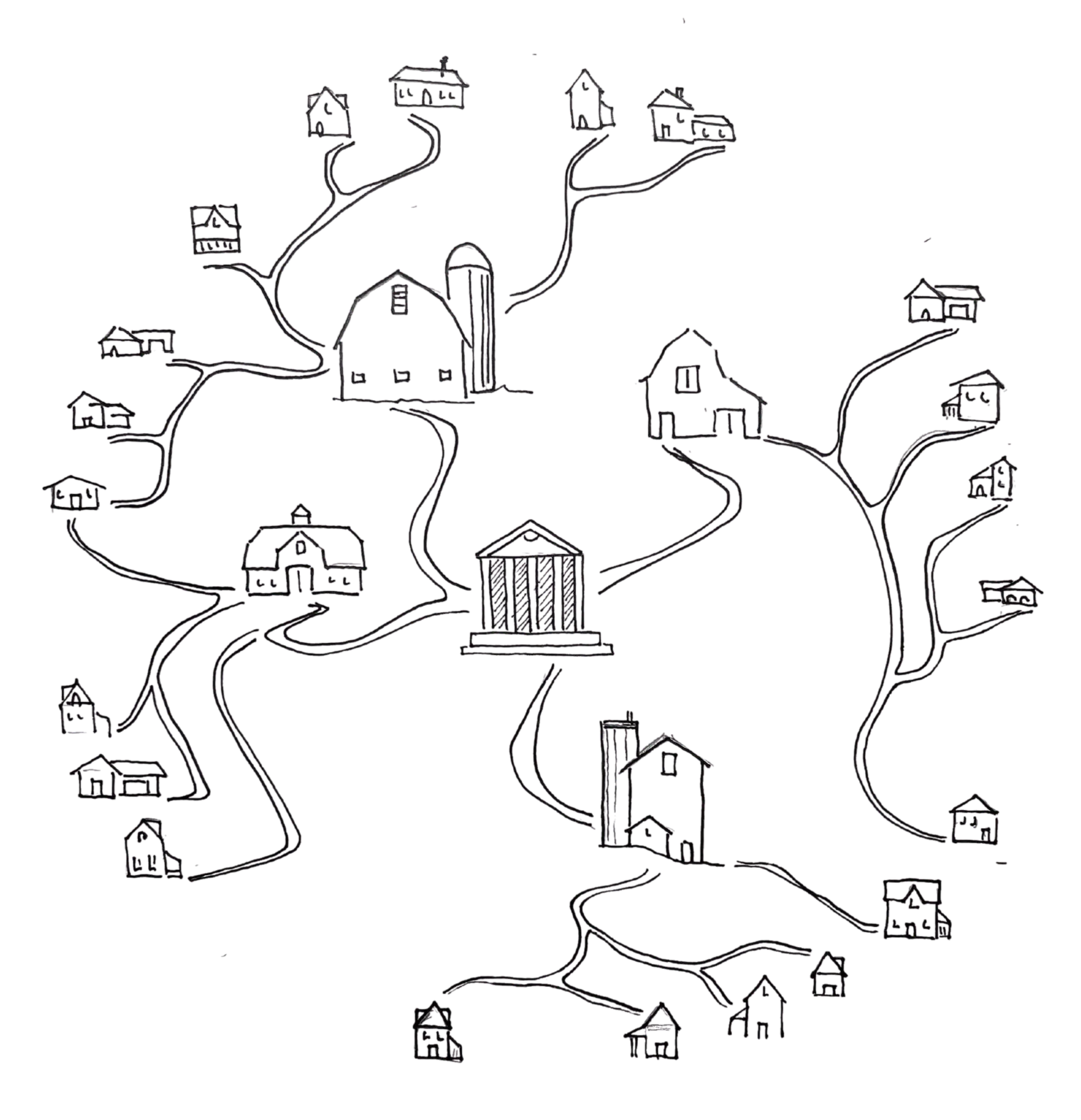
This model combines two simple legal tools: fiscal sponsorship and farmer cooperatives.
All it requires is a 501(c)(3) nonprofit with existing administrative capacity and at least one farmer serving their community.
how it works
- Nonprofit and farms agree on program budgets and fundraising systems.
- Each farmer receives a starting credit for their first season.
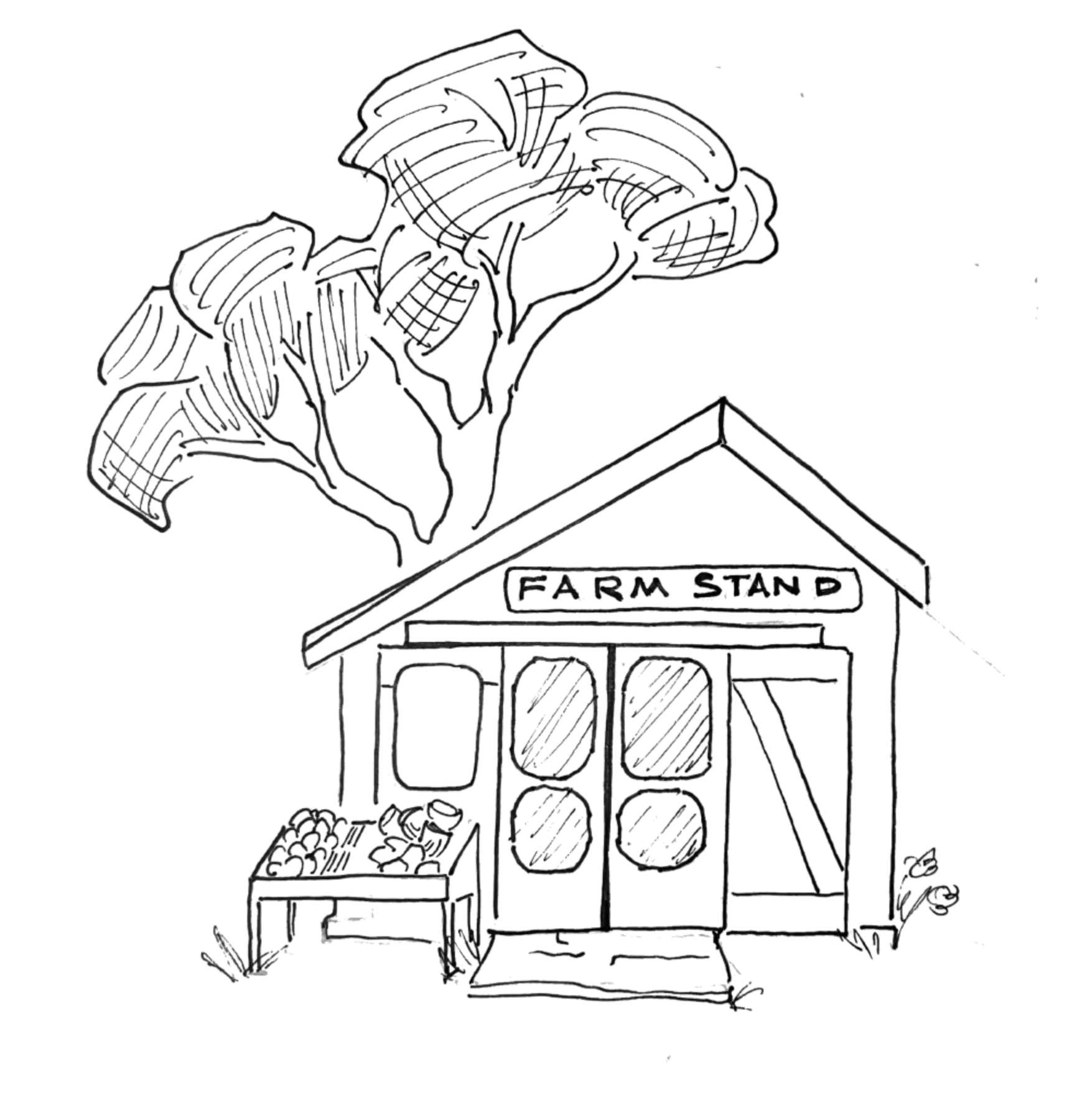
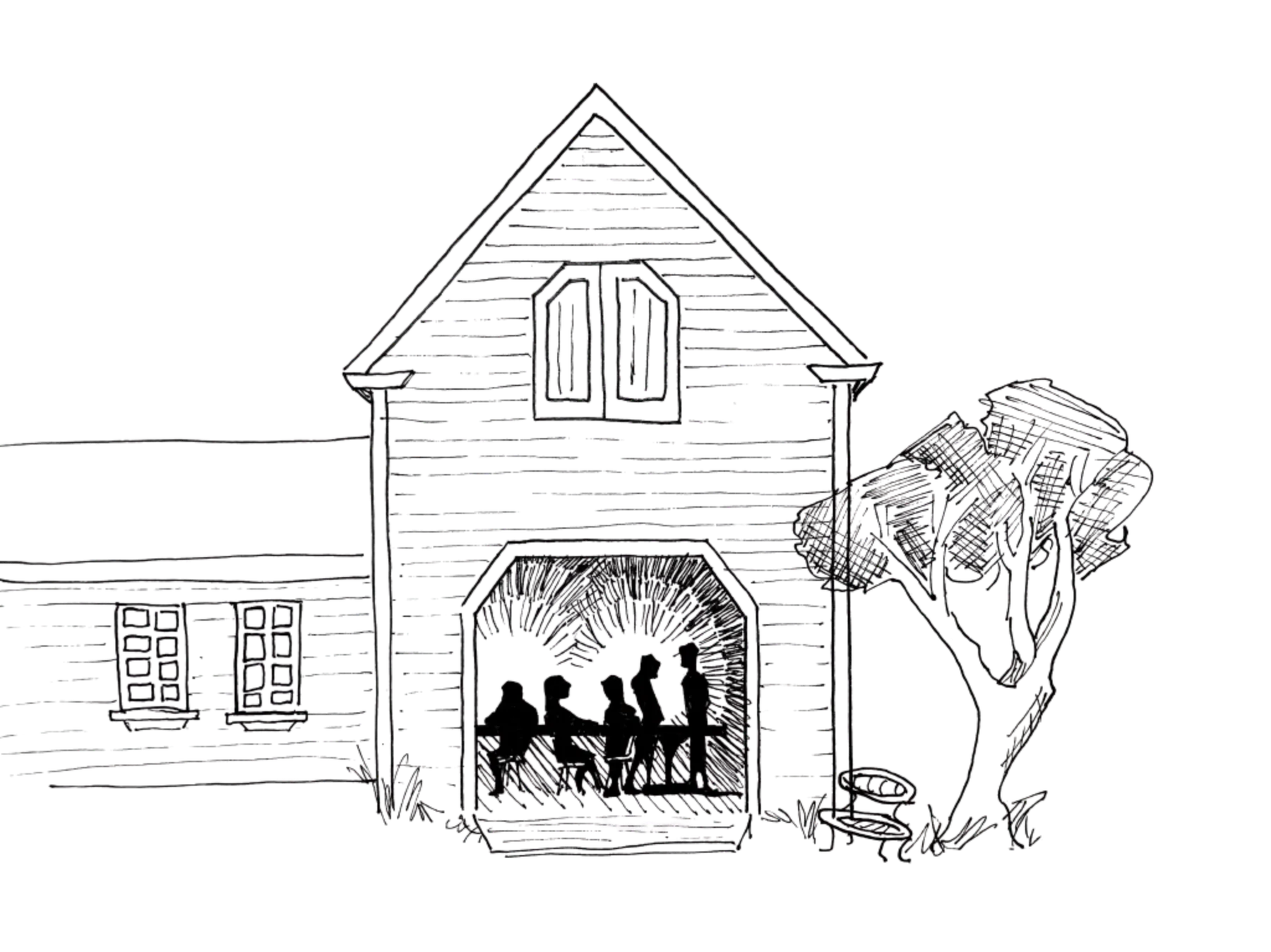
- Farmers can lead the program design: pay-what-you-can farmstands, educational workshops, community dinners, or custom programs designed around the needs of their community.
- Just track what is paid for, what is given away, and what is needed to cover the difference.
The nonprofit handles accounting, tax compliance, and insurance. Farms do the work in their communities.
designed to last and grow
Farmers can help fundraise for future seasons through tax-deductible donations from their regular customers, fundraising events (concerts, dinners, etc.), and fiscally-sponsored grantwriting.
Every dollar raised expands their program budget. The model creates its own momentum.